Industrial floor coatings in the DMV: pick by duty, not by brochure
An industrial floor is a tool. It carries steel-wheeled loads, takes dropped pallets and spilled product, gets washed with hot water or harsh cleaners, and has to stay flat and safe while people walk and drive across it every shift. Most failures we see are not product failures. They are mismatches: a thin epoxy in a wash-down room, a coating over a slab that was never moisture tested, a polish in a plant where acids etch the surface.
That is why the first question on any industrial job is what the floor does all day. Wheel type and load, temperature swings, what spills, how it is cleaned, whether it must drain, and how much downtime the building can afford all point toward one system, or rule one out. Our six systems cover the range: polished concrete for dry, high-traffic storage and distribution, urethane cement for heat, cold and chemicals, and grind and seal, flake and metallic epoxy for lighter-duty and customer-facing zones.
Across the DMV, the buildings differ as much as the duties. Older Maryland and DC-area light-industrial slabs can carry decades of coatings, oil and patched joints. Newer distribution buildings in Virginia often arrive with a power-troweled slab, a curing compound still on top and saw-cut joints that have not yet opened fully. Every slab is ground with diamond tooling (never acid etched), moisture tested before any coating goes down, and cracks and joints are repaired as written scope before the finish goes on. If you want to talk through a specific building, request a free estimate.
Industrial spaces and what each one asks of the floor
The same slab can be treated four different ways depending on what happens on top of it. These are the spaces we are asked about most.
Warehouses and distribution
Pallet jacks and forklifts put point loads and hard-wheel abrasion on the same aisles every day. Dry floors with steady traffic are the best case for densified polish. The fight is usually dust, joint edges and lighting, not chemicals.
Manufacturing and fabrication
Dropped tools, machine skids, coolant and oil. Impact resistance and chemical tolerance decide the system, and machine pads or trenches may need their own detail.
Food and beverage plants
Hot wash-down, sanitizers, fats, sugars and drains. Floors here are expected to be smooth enough to clean, slip-resistant enough to work on, coved at walls and sloped to drains. Urethane cement is the usual answer.
Cold storage and freezers
Constant cold, then a forklift in and out of a dock door with warm, wet air. Thermal movement and condensation are the stressors, and slab joints at freezer thresholds need attention.
Auto and shop floors
Oil, brake fluid, hot tires, road salt and jack stands. A well-prepared, chemical-resistant coating or sealed slab cleans up far better than bare concrete.
Data centers and clean areas
Dust control matters more than gloss. Dense, sealed or polished concrete sheds less dust, and some rooms need static-dissipative floors specified by the equipment owner.
Loading docks and wash bays
Standing water, tire scuffing, trailer landing gear and cleaning chemicals. Slope, texture and joint condition matter as much as the coating itself.
Labs and cleanrooms
Chemical splash resistance, easy decontamination and sometimes conductive flooring. Specs usually come from the lab, and we build to them.
Hangars, service bays and storage
Large bays with mixed duty: heavy wheels, fuel and hydraulic fluid on one side, display or office space on the other. Zoned systems are normal.
Industrial floors start with the slab: grinding, joints and moisture before any coating.
Which floor system fits which industrial duty
There is no single best industrial floor. This is how the main options compare when you hold them up against real operating conditions.
System
Strongest at
Weak spots
Typical industrial use
Polished and densified concrete
Abrasion, forklift traffic, dust control, light reflectance, no film to peel
Acids and some chemicals etch it; needs reasonably sound, hard concrete; not a wash-down finish
Warehouses, distribution, showrooms, storage
Epoxy (high-solids, broadcast or mortar)
Hard wear surface, strong chemical resistance, good build, color and striping options
Brittle under thermal shock; moisture-sensitive; can yellow under UV
Light manufacturing, shops, dry production
Urethane cement
Heat, cold, thermal shock, wash-down, chemicals, cove and drain details
Heavier install, limited color range, more involved prep and detailing
Kitchens, food and beverage, cold rooms, breweries
MMA (methyl methacrylate)
Very fast cure, works in cold, short outage windows
Strong odor during install, needs ventilation planning, specialist application
Time-critical shutdown windows, cold buildings
Sealed only (grind and seal)
Fast, economical, easy dust control, simple to recoat
Thin film wears in forklift lanes and needs periodic recoating
MMA and some specialty static-control systems are not part of our standard six-system menu. We will say so plainly if a job calls for one and point you to the right specification.
Wear and loading: what actually destroys a warehouse floor
Forklift wheels are the main test. Hard polyurethane wheels on a loaded lift concentrate force through a small contact patch, and turning under load scrubs the surface sideways. That is why high-traffic lanes wear first, and why a thin coating in those lanes can burn through in months while the same coating survives for years in dead storage.
Pallet jacks add a second problem. Their small, hard wheels ride joints and crack edges, which chips the shoulders of control joints and hammers any weak patch. Heavy racking adds static point loads at the base plates, which is a slab design issue, but a coating that is too soft can show indents.
Thermal shock hits food plants and freezer docks. Hot water on a cold floor makes the surface expand faster than the substrate beneath, and rigid coatings can crack or delaminate. Impact from dropped steel, chemical splash from battery acid or cleaners, and tire plasticizer marks round out the usual list. Naming the actual stressors, and ranking them, is the most useful thing an owner can bring to an estimate.
Wheel type: hard poly versus softer rubber changes abrasion a lot
Load: loaded lifts, tuggers and racking footprints
Cleaning: dry sweeping, scrubbers, pressure wash, hot water or steam
Temperature: freezers, ovens, dock doors, sun on a concrete apron
28 daysminimum concrete cure before joint filler, per filler data sheetsLonger when possible
CSP 1 to 2profile diamond grinding generally producesICRI Concrete Surface Profile scale
1910.22OSHA walking-working surfaces rule: clean, dry as feasible, load-ratedIt does not mandate a coating
C722ASTM test to ask for when thermal shock is the riskSpecifier guidance for wash-down areas
Concrete condition problems we plan for before coating
Industrial slabs are rarely clean, flat or new. Most of the work on a good job happens before the finish coat.
Control and saw-cut joints
Joints are built to open and close with the slab. Rigid coatings bridged across them will crack at the joint line. We rout and fill joints with a semi-rigid filler that supports the edges under hard wheels. On new slabs, timing matters: filler data sheets call for a minimum of 28 days of concrete cure, and manufacturers advise waiting longer when possible so shrinkage has largely finished and the filler does not pull away from the edges.
Joint edge spalling
Hard wheels chip the shoulders of saw cuts. Damaged edges are cut back and rebuilt before filling, otherwise the new filler fails along the same crumbling edge.
Curling and slab edges
Concrete can curl upward at joints as it dries. A curled edge is a hammer point for wheels and is often the first thing to break. Grinding can reduce small lips, and large curl may need a repair mortar or leveling work.
Cracks
Hairline shrinkage cracks, structural cracks and active cracks are different problems. Dormant cracks are routed and filled. Active cracks move, and a rigid fix will reopen, so we flag them in the scope instead of promising they disappear.
Moisture vapor
Older slabs and slabs on grade without a working vapor barrier can push moisture up. We test before coating, using in-situ relative humidity probes per ASTM F2170 where appropriate. Readings describe the slab only on the day of the test, and the acceptable limit is set by the coating manufacturer, so a result is judged against the specific system. Urethane cement tolerates moisture better than epoxy.
Old coatings, oil and contamination
Previous paint, failed epoxy and oil-soaked concrete all block adhesion. Diamond grinding removes coatings and opens the surface to a defined profile, generally in the ICRI CSP 1 to 2 range, and the coating manufacturer's data sheet sets the profile each system needs, and badly oil-saturated areas may need extra cleaning or removal. Acid etching is never part of our prep.
How an industrial install runs, step by step
Exact scope varies, but a properly run job follows the same logic whether it is 5,000 square feet of food plant or an entire distribution bay.
Site walk and duty review
We look at the slab, ask about wheel traffic, chemicals, cleaning and temperature, and note drains, joints, thresholds and obstructions. Photos of existing damage help.
Slab testing
Concrete hardness, existing coatings and moisture are checked. Moisture testing happens before anything is coated, because a failed coating costs far more than a test.
System selection and written scope
The proposal names the system, the surface prep, crack and joint repair, cove or drain details, striping and phasing in writing, so there is nothing hidden.
Phase plan
Keeping a building running means dividing the floor into zones, finishing one while work shifts to another, and releasing each as it cures: foot traffic first, light wheels next, loaded forklifts last. The plan lists the zone sequence, an approved on-site mockup of sheen and texture, racking moves, dock access, and ventilation and dust control for occupied buildings. Weekends, nights and planned shutdowns are the usual windows.
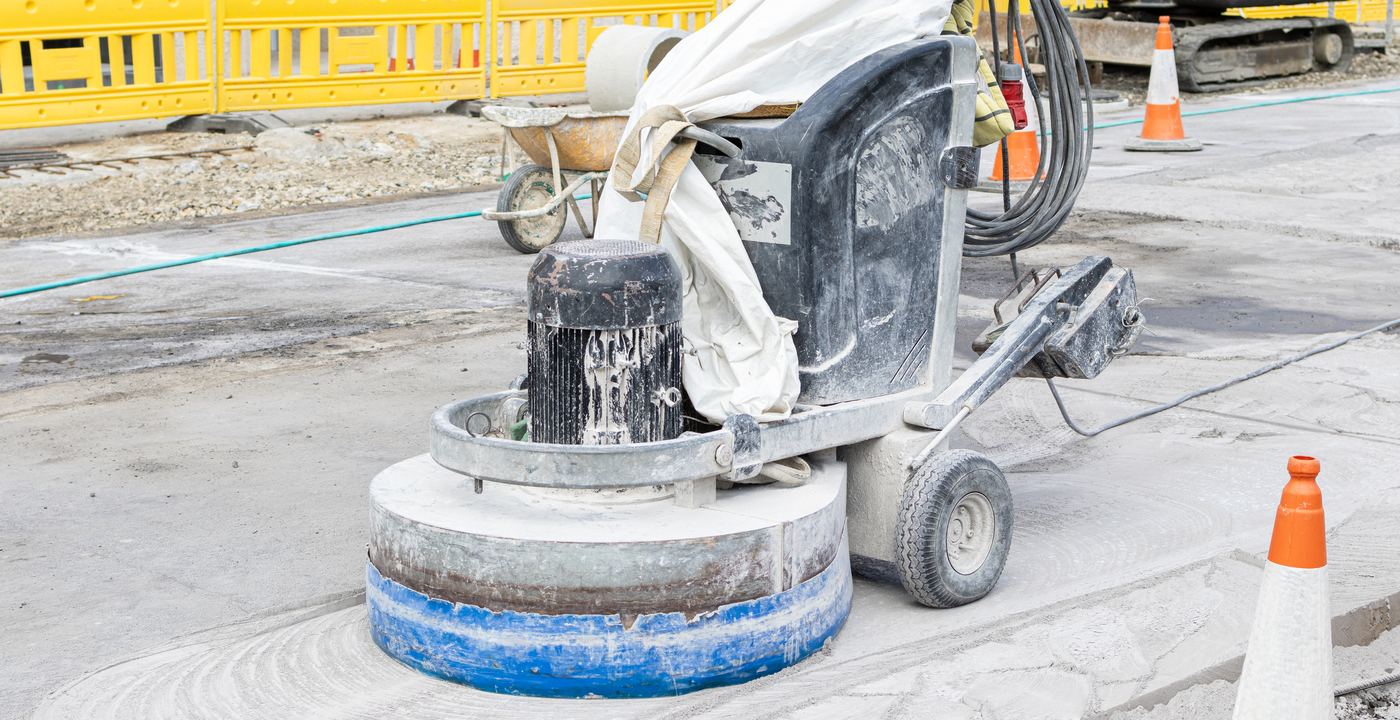
Diamond grinding and repair
Every slab is ground with diamond tooling. Cracks, spalls and joints are repaired and left ready to accept the system.
System installation
Polish and densify, seal, or place the resinous system in the sequence the product requires, respecting temperature, humidity and cure windows.
Striping and safety marking
Aisle lines, pedestrian lanes, machine keep-out zones and dock numbers are laid out and applied once the surface can take them.
Walkthrough and return to service
You approve the surface, receive cure and cleaning guidance, and release areas back to traffic in the order the product allows.
Example: a phased install in a working facility
Phase 1
Phase 2
Phase 3
Bay A
Work zone
Open
Open
Bay B
Back in use
Work zone
Open
Bay C
Back in use
Back in use
Work zone
Illustration of the idea; real phase plans follow your operations and the product cure times.
Safety and compliance: what to verify, and what a floor can and cannot do
OSHA's walking-working surfaces rule, 29 CFR 1910.22, requires employers to keep floors clean, orderly and as dry as feasible, free of hazards such as spills, leaks, corrosion and sharp or protruding objects, and capable of supporting the maximum load they are intended to carry. A good floor makes that duty easier. It does not replace housekeeping or an engineer's load rating.
Slip resistance is a design choice. Texture, aggregate and cleaning all change how a floor performs wet or oily, and a rougher surface is harder to clean. Ask for a texture that matches the wetness and cleaning of each area, and ask whether slip testing, such as DCOF per ANSI A326.3, is relevant for the space. OSHA's safety color code lists yellow for caution about stumbling and falling hazards and red for danger, but it does not mandate specific floor-marking colors, so many facilities set their own marking plan. Food plants should also check local health authority and FDA Food Code requirements that floors be smooth, durable and easily cleanable. Static control is specified by the equipment owner, often against ANSI/ESD standards, and should be confirmed in writing before any ESD system is chosen.
Polished concrete for warehouses: dust, light and traffic
Bare warehouse concrete dusts. As wheels scrub it, fine cement powder lifts into the air and settles on stock, racks and equipment. Densifying and polishing hardens and tightens the surface so that dust largely stops, and sweeping and scrubbing become far more effective.
A polished floor is also more reflective than a bare or painted one. In a big building, that means light bounces further and fixtures work better, which can help with the cost and quantity of lighting. Floor reflectance is measured as light reflectance value (LRV), and how much it helps lighting depends on ceiling height, wall color and fixtures. Any fixture savings should come from a lighting model for your building, not a blanket percentage, and we treat reflectivity as a benefit to confirm on site.
If dust comes back soon after cleaning, the cause is either soil tracked in or a surface that is deteriorating, and an inspection tells you which. Polish has limits. It does not like acids, it is not a wash-down finish, and it needs a slab that is hard and sound enough to refine. If your slab is soft, heavily contaminated or full of cracks, a grind and seal or an overlay may beat it. Read our polished concrete page for the process and sheen levels.
Dust-proofing for stock and equipment
No film to peel under forklift traffic
Higher light reflectance across large bays
Routine care is dust mopping and auto-scrubbing
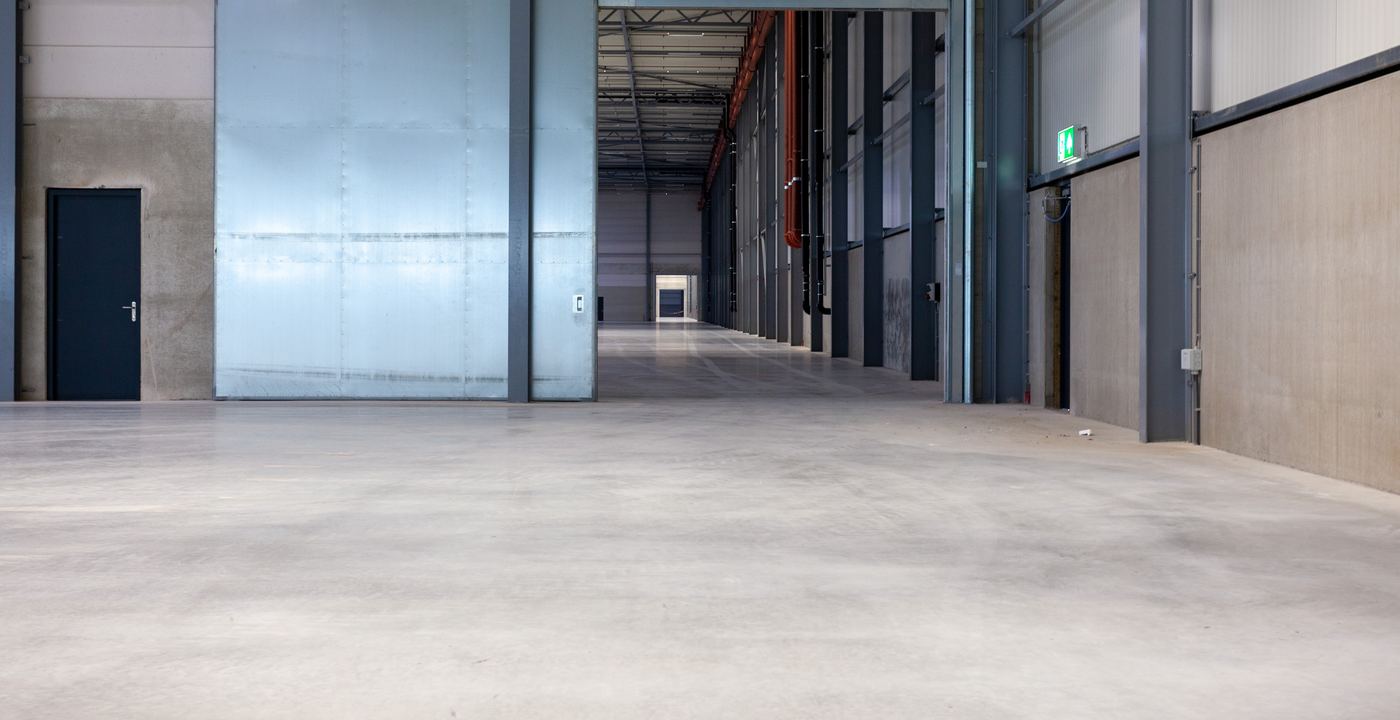
A polished, densified slab: no film to peel under forklift traffic and more light bounced back across the bay.
Industrial work across the DMV
Industry reports describe the Springfield and Lorton stretch along I-95 as the part of the DMV's Virginia side with the most industrial inventory, with Sterling and the Dulles area anchoring the Loudoun side and Bladensburg and Brentwood serving as lower-cost industrial ground close to DC. Data centers in Loudoun have also reshaped what industrial land is used for. Those are very different buildings: a distribution shed wants wear resistance and dust control, a data hall wants low dust and sometimes a static-control floor.
Weather shapes the work. Humid summers push moisture through slabs and affect resin cure, and freeze-thaw winters mean road salt on dock aprons and tracked-in brine on interior floors. We schedule around temperature and humidity windows, and we plan for salt the way a food plant plans for sugar.
We are based in Alexandria, which puts Springfield, Lorton and the I-95 corridor close, and we serve Virginia, DC and Maryland. Whatever the address, the process is the same: test, grind, repair, match the system to the duty, and put the scope in writing.
Polish the warehouse slab, or coat it?
Polish and densify when
The goal is dust-proofing, light reflectance and low upkeep
Traffic is forklifts, pallet jacks and foot traffic on a sound slab
Chemical exposure is occasional, not daily
No film to peel is the priority
Coat or topping when
Daily chemicals, wash-down or thermal shock: urethane cement
Impact and heavy point loads: mortar or slurry builds
Color coding, striping and safety marking are required
The slab is spalled, curled or badly jointed and needs a build
From the system-by-duty table above.
Special conditions: batteries, static, wash-down and cold
Four situations come up often enough in warehouses and plants that they deserve their own planning.
Battery-charging areas
Acid exposure may call for a chemical-resistant coating or containment detail, because acids can etch polished concrete and some spills can stain it. Not every charging area needs one, so ask what is actually in the batteries and how spills are handled.
Static control and ESD
Storing electronics does not by itself create a need for an ESD floor. The facility's own ESD program sets the requirement, and the specification should name the required resistance range and test method before anyone quotes a system.
Wash-down and thermal shock
Hot water or steam on a cold slab makes a rigid coating and the concrete under it move at different rates. Epoxy can crack or spall under repeated cycling. Specifier guides point to urethane cement here and suggest asking for thermal shock results under ASTM C722.
Cold storage and fast shutdown windows
MMA cures in roughly an hour or two and can be installed in cold conditions that stall epoxy, but its strong odor needs ventilation planning. It costs more in materials and is a specialist install, so it earns its place only when the outage window is the main constraint.
Dock aprons and exterior transitions
Salt, freeze-thaw and standing water attack thresholds first. Transitions between interior coating and exterior slab need a deliberate joint detail, not a feathered edge.
Racking and slab loads
Coatings do not add structural capacity. Racking base plates and loaded lifts are a slab design question, and 1910.22 puts the duty on the employer to know what a surface can carry.
Maintaining an industrial floor
Maintenance is mostly consistency. Sweep or auto-scrub on a schedule, wipe spills quickly, avoid harsh cleaners that do not suit the system, and stop abusing lanes with dragged pallets or steel on the surface. Urethane cement and epoxy want neutral or system-approved cleaners. Polished floors want neutral cleaners and the occasional burnish.
Plan for recoating lanes. Sealed floors in forklift lanes need periodic recoating, and resinous topcoats can be renewed without a full tear-out. Joint fillers should be inspected after the first season, because joints keep moving.
Walk the floor twice a year. Look at joints, thresholds, drains, chips and worn lanes. Small repairs early are far cheaper than rebuilding a failed area.
Auto-scrub or sweep on a fixed schedule
Clean spills quickly, especially acids and fuels
Use cleaners approved for your system
Inspect joints and thresholds every season
What to ask any industrial floor contractor
Ask what the contractor will do about the specific things that kill floors. A good answer is concrete, not a slogan. If a bid is vague on prep, joints or moisture, assume those items are not included.
Ask to see the written scope. It should name the system, the surface prep method, joint and crack treatment, moisture testing, striping, phasing and cleanup. Ask what happens if testing finds a problem, and who decides.
How will you prepare the slab, and is acid etching involved?
Will you moisture test, and which method?
How are joints and cracks treated, in writing?
How will you phase the work around our operation?
What traffic can return after each stage?
How do you control dust and odor in an occupied building?
Which of the stated duties does this system not handle well?
For dry storage and distribution with forklift traffic, densified and polished concrete is often the best long-term fit because there is no film to peel, it controls dust, and it reflects light. Where you need chemical resistance, color-coded zones or a seamless, wash-down surface, an epoxy or urethane cement system fits better. Many warehouses use a mix by zone.
Is epoxy or polished concrete better for an industrial floor?
It depends on the duty. Polished concrete wins on abrasion, dust control and low upkeep in dry areas. Epoxy wins where chemicals, color and marking matter. Epoxy can be brittle under thermal shock, and polish does not like acids, so neither is a universal choice.
What is urethane cement, and when do I need it?
Urethane cement is a thick resinous system that tolerates heat, cold, thermal shock, moisture and many chemicals. It is the usual choice for food and beverage plants, commercial kitchens, breweries and wash-down floors. See our urethane cement page for details.
Can you coat a floor while we keep operating?
Usually yes, through phased installs. The floor is divided into zones, each finished and released in turn, with weekend or overnight work when needed. Foot traffic comes back first and heavy forklift loads come back last, based on the cure of the specific system.
Do you need to test for moisture before coating an industrial slab?
Yes. Moisture vapor through a slab can cause blistering and delamination under many coatings. We test before coating, commonly using in-situ relative humidity probes under ASTM F2170 where appropriate, and choose or adapt the system to the result.
How do you handle cracks and joints in a warehouse floor?
Dormant cracks are routed and filled. Control and saw-cut joints are cleaned, damaged edges are rebuilt and joints are filled with a filler suited to the traffic. Active cracks and joints move, so we do not promise they vanish, and repairs are written into the scope.
Will a coating make my floor slippery?
It can if the texture does not match the conditions. A smooth, glossy surface is easier to clean but slicker when wet. We discuss texture by area and can add aggregate where needed. Ask whether slip testing, such as DCOF per ANSI A326.3, is relevant to your space.
Does OSHA require a specific floor coating?
No. OSHA's walking-working surfaces standard, 29 CFR 1910.22, requires floors to be kept clean and orderly, free of hazards and able to carry their intended loads, but it does not mandate a coating type. Your safety manager or insurer may have additional requirements.
Do you install static-control or ESD floors?
Static-control floors are specified by the equipment owner, usually against ANSI/ESD standards. If your space needs one, we will review the written specification with you before quoting, and tell you directly if it is outside what we install.
Do you shot blast or acid etch industrial slabs?
We diamond grind every slab and never acid etch. Some contractors list shot blasting, grinding and acid etching as prep options, but etching leaves residue and an uneven profile, and the coating manufacturer's data sheet defines the profile required.
What is MMA flooring and do I need it?
MMA is a fast-curing resin that returns to service in roughly one to two hours and can be installed in cold conditions. The tradeoffs are strong odor, ventilation planning and higher material cost. It suits tight shutdown windows. It is outside our standard system list.
What does an industrial floor estimate include?
A written scope naming the system, surface prep, crack and joint repair, moisture testing, details like cove and drains, striping and the phase plan. Pricing depends on factors such as area, slab condition and schedule. Request a free estimate and we will walk the space with you.
Planning a industrial floor?
Tell us about your space. We'll recommend the right system and send a free estimate.