Older slabs and no vapor barrier
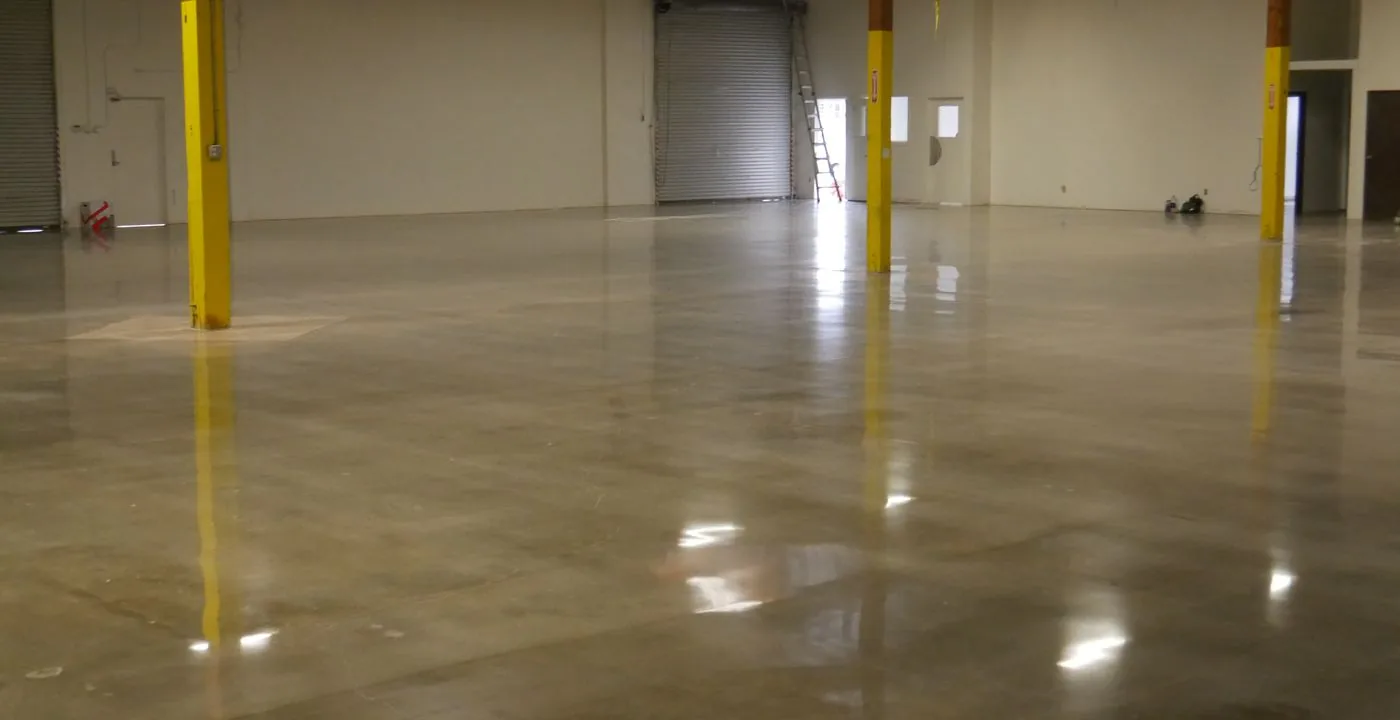
Many slabs poured in the 1950s through the 1970s were laid straight on soil or gravel with no vapor barrier under them. Moisture can rise through them for as long as the ground stays wet.
Cost & Planning
Epoxy flooring cost depends far more on the slab and the scope than on the epoxy itself. This guide shows what moves a quote and how to compare bids fairly.
Search for epoxy flooring cost and you will find a lot of single numbers. They are tidy, and they are almost always misleading. A coating job is not a product you buy off a shelf. It is a bundle of labor, surface repair, materials and cure time wrapped around one specific slab, and no two slabs in the DMV are alike. A 1960s Alexandria garage with hairline cracks and decades of drips is a different job from a new townhouse garage in Haymarket, even if the square footage is identical.
We do not publish prices on this site, and this guide will not give you a per-square-foot figure. A made-up average would only teach you to distrust the honest quote that does not match it. What we can do is something more useful: explain every factor that changes the price, tell you which ones are negotiable and which are not, and show you how to read a written scope so that two quotes can be compared line by line.
Whether you searched for epoxy flooring installation cost, epoxy garage floor coating cost, or simply how much it costs to epoxy a garage floor, the answer has the same shape. The final number is the sum of preparation, system, area and conditions. Preparation is the part most people underestimate and most cheap quotes quietly shrink. By the end you should be able to look at any bid and see what it includes, what it leaves out, and why.
The honest short answer is that price follows work.
More square footage means more material and more hours. A rougher, more damaged slab means more grinding and more repair. A thicker or more decorative system means more coats, more product and more steps. Awkward access, drains, stem walls, old coatings to remove and tight schedules each add their own line.
It also follows risk. A contractor who tests moisture, grinds the whole slab and fills every crack is buying down the chance that your floor peels in two summers. A contractor who skips those steps has not found a clever shortcut. They have moved that risk onto you and quoted a lower number for the privilege.
So when someone asks what epoxy flooring costs, the useful reply is a question back: what does the slab look like, what do you want it to do, and what is the quote actually including? The sections below turn that into a method you can use.
Use this table as a checklist when you talk to any contractor. Each row is a real reason a quote goes up or down, and a question that exposes whether it has been priced properly.
| Factor | Why it moves the quote | What to ask |
|---|---|---|
| Square footage and layout | More area means more material and labor, but a cut-up floor with posts, steps, columns and many edges takes longer for the same floor area than an open rectangle. | Is the area measured on site, and are edges, steps and obstacles accounted for? |
| Slab condition | Cracks, spalls, pitting, oil stains, patched areas and uneven spots each need repair work before any coating can bond. | What repairs are in the written scope, and how are cracks and joints filled? |
| Surface prep method | Diamond grinding takes time and equipment, and dust control adds more. Light prep is quicker and cheaper and bonds worse. | Is the whole floor ground, and to what profile? Is acid etching being used instead? |
| Moisture testing and mitigation | Testing takes time. If readings are high, a moisture-mitigating primer or a different system adds product and a step. | What test is used, what were the readings, and what happens if they are high? |
| System type | Solid color, flake, metallic, quartz, urethane cement and polyaspartic topcoats use different materials and different numbers of steps. | Which system is this, and why does it suit how I use the space? |
| Number of coats and film build | Each coat is more product, more labor and more cure time. Thicker builds also take more preparation to keep them flat. | How many coats, and what is the total thickness of the finished system? |
| Old coatings to remove | Failed paint, old epoxy or sealer must come off or be ground through. Heavy build-up slows the grinder considerably. | What is on the floor now, and how will it be removed? |
| Cove base and stem walls | Curving the coating up the wall for a sealed edge is hand work, as is coating short stem walls and column bases. | Is a cove or wall base included, and how high? |
| Drains and slopes | Drains need clean terminations, and sloped floors need careful application so the coating does not pool. | How are the drain edges and slopes handled? |
| Slip resistance | Texture additives, broadcast aggregate or a textured topcoat add material and care, and they change how the floor cleans. | What slip resistance is being added, and where? |
| Access and site conditions | Stairs, tight alleys, rowhouse basements, long carry distances and limited parking all add labor. | Are there access limits I should flag now? |
| Scheduling and phasing | Commercial floors that must stay in service mean night or weekend work and sectioned phases. Travel to remote sites adds time. | How would the work be phased around my operation? |
| Cure time | Rushing cure to return to service sooner usually means faster materials or extra visits. | When can I walk on it, park on it and load it? |
No row on this table is padding. If a quote does not mention a factor that clearly applies to your slab, ask why.
Epoxy and its cousins do not stick to concrete the way paint sticks to drywall. They grip a rough, open surface. That surface only exists after the top layer of the slab is mechanically removed, which is why a professional job starts with diamond grinding rather than a bottle of etching acid. Grinding opens the pores, strips sealers and laitance, and creates a profile the coating can lock into. Industry practice measures that profile on the ICRI CSP scale, and thin coatings generally want a lighter profile than thick troweled or broadcast systems.
Prep takes time, and the amount of time depends on what is on the floor. A bare, sound, newer slab grinds quickly. A garage with decades of oil, paint drips, old sealer and patchwork takes longer and wears more tooling. Grinding also has to reach the edges and corners, where a large machine cannot go, and that is hand work with smaller grinders.
Then comes repair. Cracks and control joints move with temperature, and the DMV gives them plenty of reason to: humid summers, freeze-thaw winters and road salt that wicks into the slab. A crack that is skipped will telegraph through the coating, and a joint filled with the wrong material will separate. A proper scope names how cracks are cleaned or routed, what fills them, and how spalls and divots are patched.
Concrete is porous, and in much of the DMV it sits on ground that is damp for months. Moisture moving up through a slab is the hidden reason coatings blister and peel, and it is the one factor a quote cannot honestly set without a test.
Many slabs poured in the 1950s through the 1970s were laid straight on soil or gravel with no vapor barrier under them. Moisture can rise through them for as long as the ground stays wet.
Finished basements and DC rowhouse basements sit against soil on several sides. They often carry more moisture than an above-grade garage slab, and they have less airflow to dry it out.
Two common methods are ASTM F2170, which uses probes to read relative humidity inside the slab, and ASTM F1869, which measures vapor emission using calcium chloride. Which one a contractor uses, and what readings they accept, should be in writing.
When readings are high, a moisture-mitigating primer, rated under ASTM F3010, can allow a coating to go down where it otherwise would fail. It is an extra material and an extra step, and it is a real part of the bill when needed.
Humid summers can push a borderline slab over its limit. A test taken in a dry spell can read better than the slab behaves in August, so ask when and how the test was done.
A slab with active water intrusion needs the water problem fixed first. A good contractor will tell you that and not coat over it.
Different systems solve different problems. Differences in price between them come from materials, number of steps and finishing labor, not from branding.
| System | What it is | What drives its price | Good fit |
|---|---|---|---|
| Solid color epoxy | Pigmented epoxy rolled over a primed, ground slab, often with a clear topcoat. | Fewest steps. Cost rises with extra coats and any textured additive. | Utility garages, shops, storage |
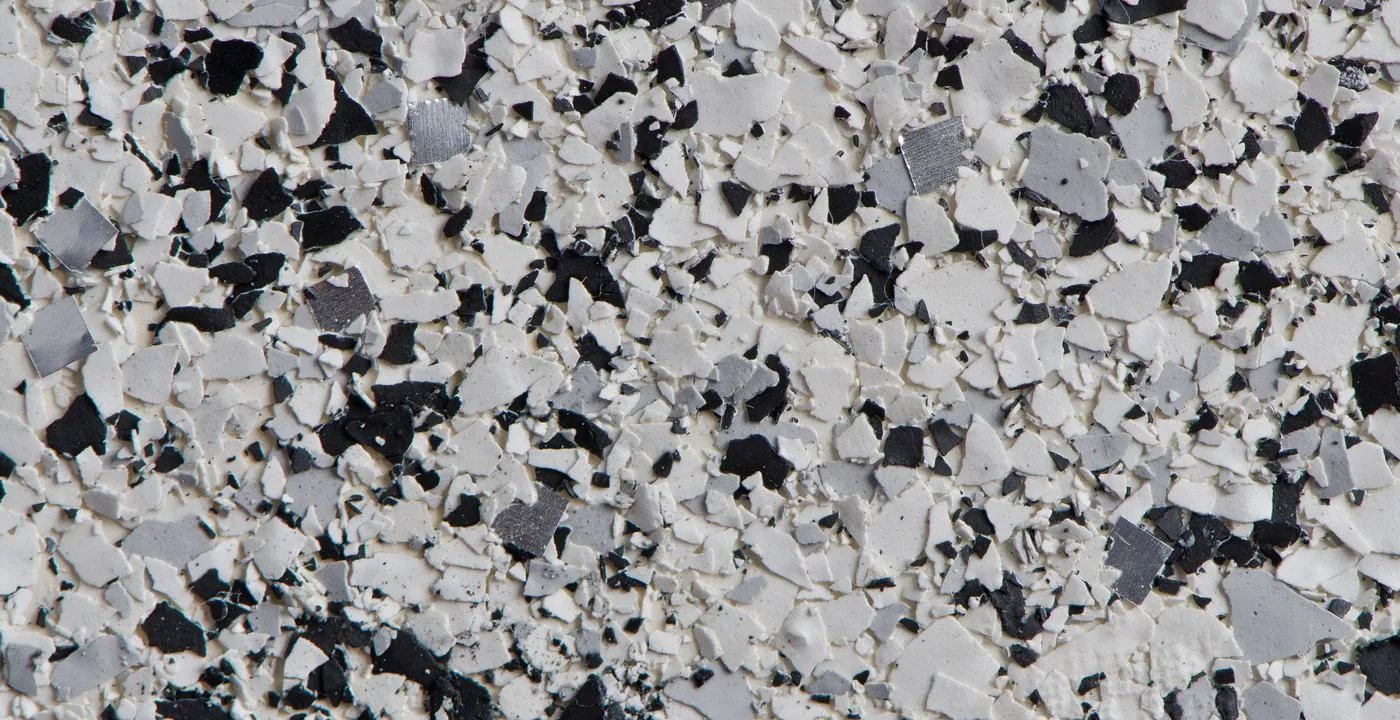
| Flake system | Epoxy base with colored vinyl chips broadcast into it, then sealed with a clear coat. | More coats, broadcast and scraping labor, and the amount of flake used. | Home garages, showrooms, flake floors |
| Metallic epoxy | Pigmented epoxy worked by hand into depth and movement, then sealed. | Skilled hand labor and tighter prep requirements. Every floor is one of a kind. | Showrooms, retail, design-led spaces |
| Quartz or aggregate broadcast | Epoxy loaded with colored quartz for a thick, textured, durable surface. | More material and more coats, and a thick build that needs careful prep. | Wet areas, heavy foot traffic, slip-sensitive zones |
| Urethane cement | A heavy, cementitious urethane layer, often troweled thick. | Costly materials and specialist application, but made for harsh conditions. | Commercial kitchens, food plants, thermal shock areas |
| Polyaspartic topcoat | A fast-curing clear coat over a base, used for UV stability and quick return to service. | Material cost and a short working time. Often added on top of another system. | Sunlit garages, short downtime windows |
A thicker or more layered system is not automatically a better one. A residential garage rarely needs what a commercial kitchen does.
Film thickness is measured in mils, thousandths of an inch.
A lightly built paint-style coating may be only a few mils thick, while a full flake or quartz system builds far more. More build resists wear and hides small surface flaws, but only if it is bonded to a properly prepared slab. A thick system on poor prep fails just as a thin one does, only with more material to peel.
When you compare quotes, ask for the number of coats and the intended total thickness in writing. Be wary of quotes that list a single coat described as "epoxy" with no detail. A complete system usually includes a primer, a base or build coat, any decorative layer, and a protective topcoat. Each layer has its own cure window, and each adds a trip, a product and a line on the invoice.
It is also worth asking what the topcoat is. Epoxy on its own can yellow in direct sun over time, which is why many sunlit garages get a UV-stable clear coat on top. That choice changes the material cost and the schedule, and it affects how the floor looks in five years.
The details around the edges of a floor are where a quote reveals whether someone has actually looked at your space.
A cove base, which curves the coating a few inches up the wall, gives a sealed, wipeable edge that stops liquids from running under the floor. It is common in kitchens and wash bays and is hand-finished work that takes time. Stem walls, steps and column bases are similar: small in area, big in labor.
Drains need clean edges, and the floor around them may need to slope toward them. Garages in townhouse communities and HOA-managed buildings sometimes have limited parking, shared elevators or restricted work hours. DC rowhouse basements may mean carrying every bag of material and every grinder down a narrow stair. None of this is exotic, and all of it takes hours.
Slip resistance deserves its own thought. A glossy coating can be slick when wet, especially with road salt brine tracked in during the winter. Texture can be added through aggregate in the topcoat or a broadcast layer. Commercial spaces may need slip performance measured, and ANSI A326.3 is the standard commonly used for dynamic coefficient of friction testing. Slip resistance changes both the materials and how easy the floor is to clean, so decide it early.
Commercial floors add a different set of cost drivers.
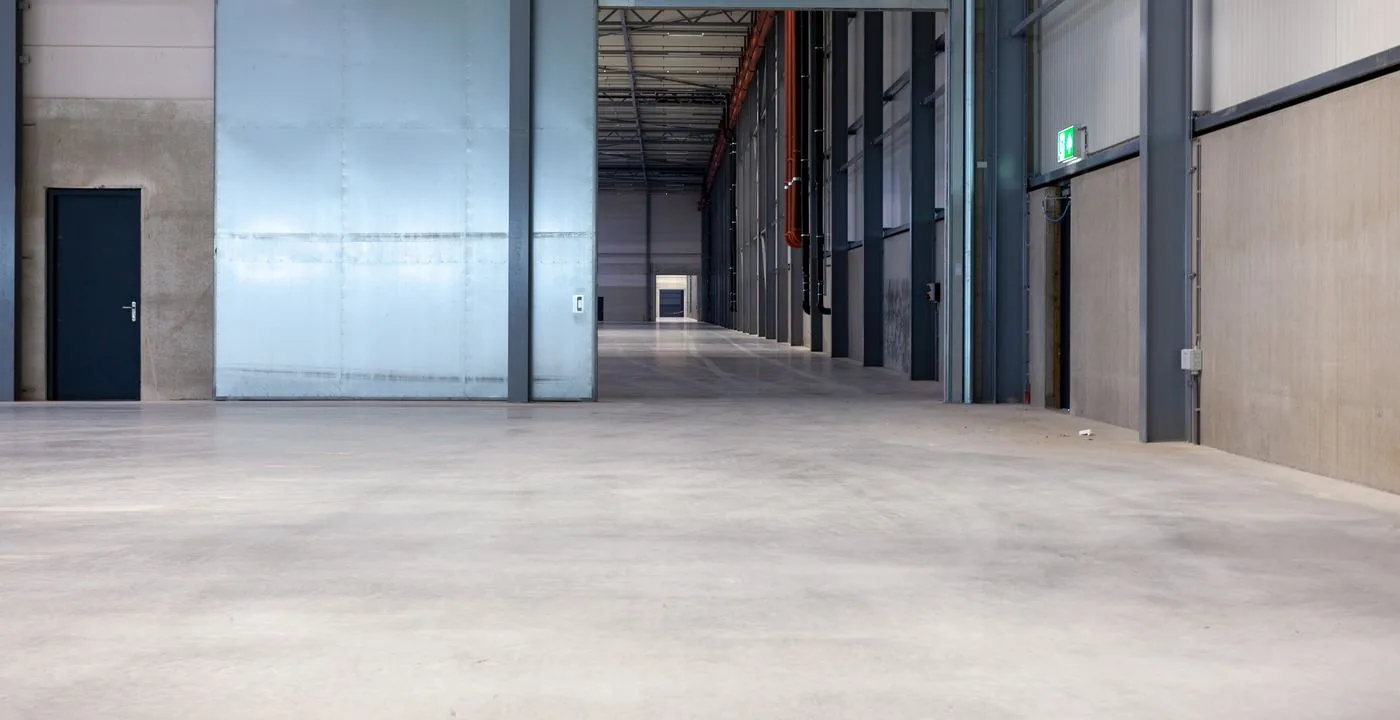
A restaurant or warehouse often cannot close for days, so the work gets phased: one section at a time, overnight, or over a weekend. Phasing means repeated setup, careful joints between sections and more days on site. A warehouse in Lorton, Manassas or Leesburg is a long run for crews and equipment, and travel and mobilization are real parts of a large project.
Commercial kitchens and food areas add code and cleanliness requirements, with floors that need to be smooth, nonabsorbent and easy to clean, and slip-aware where it is wet. Industrial floors have to survive forklift traffic, chemicals and heat. Those demands usually point toward heavier systems, and heavier systems cost more.
If you manage a facility, bring your operating schedule to the estimate. How long a floor can be out of service often decides the system more than the budget does. See our pages for commercial and industrial spaces for what these projects involve.
A quote is only comparable if it describes the same job. These steps turn a pile of bids into something you can judge fairly.
A real scope lists the area, the system, the number of coats, the prep method, repairs, edges, and what happens if conditions change. One line with a total is not a scope.
Look for diamond grinding of the whole floor. If the quote says etching, pressure washing, or says nothing, the number is low for a reason.
The quote should name the test, who does it and what happens if the slab reads high. A bid with no testing step has priced the best case.
Cracks, joints and spalls should be named, with the fill material described. Silence here often means they will be coated over.
Primer, base coat, decorative layer, topcoat. If one bid has four layers and another has two, they are not the same product at different prices.
When can you walk, park and load the floor? A believable answer fits the materials, not the sales pitch.
Furniture moving, old coating removal, drain work and wall base are common extras. Know what is in and what is not.
Do not take verbal promises about how long a floor will last. Whatever a contractor stands behind should be on paper, with terms you can read.
The cheapest quote is not always wrong, and the most expensive is not always careful.
But a bid far below the others is usually cheaper for a reason, and the reason is usually that something has been left out. The labor and materials that disappear first are the ones you cannot see in the finished floor: grinding time, moisture testing, crack repair, full-coverage priming, and curing between coats.
None of those show up in a photo the day the job is done. They show up eighteen months later, when the coating lifts at a crack, blisters over damp concrete or peels where a hot tire sat. By then the contractor may be hard to reach, and the repair means grinding off a failed coating, which is more work than doing it right the first time.
This is not an argument for the most expensive bid. It is an argument for paying attention to what a number buys. If the scope matches and the price is lower, ask how. If the scope does not match, the price comparison means nothing.
Some companies advertise a floor in a single day. A fast-curing system can shorten a project, but a full job still needs real grinding, repair, a primer, a body coat and a topcoat, each with its own cure time. If a one-day pitch includes none of that, something is being squeezed.
Ask three things. How is the surface prepared? When is moisture tested? How long does each layer cure before the next? If the answers are vague, or the whole plan depends on skipping steps, treat the speed as a risk, not a benefit. Speed is fine when it comes from the right materials. It is a problem when it comes from missing prep.
Kits are a legitimate option for the right garage and the right owner. Here is a plain comparison with no brand attacks.
| Area | DIY kit | Professional install |
|---|---|---|
| Surface prep | Usually degreasing and acid etching, or a rented grinder. Results depend on skill and tooling. | Commercial diamond grinding with dust control, plus edge work. |
| Moisture | Often a plastic-sheet test. This is a rough check, not a measurement. | Standard test methods, with a plan if readings are high. |
| Materials | Thinner, lighter-build products in small quantities. | Commercial-grade systems with a selectable build. |
| Repairs | Fillers from the hardware store, applied by the owner. | Repair materials matched to the crack, joint or spall. |
| Time and labor | Several weekends plus equipment rental, with a long cure before use. | Planned crew time, with cure scheduled between layers. |
| Risk | The owner carries the risk if it fails or peels. | Risk is shared with the contractor, within what is in the written terms. |
| Fits best | Small, dry, sound slabs with light use. | Larger or older slabs, busy floors, decorative systems, commercial use. |
If your garage is small, dry and sound, a careful DIY job can be reasonable. The tradeoff is time, tools and risk, not just the coating itself.
Cost is not just the day of the install. It is what the floor costs per year of use, and that depends on how long the coating stays bonded, clean and attractive.
A floor that is prepared correctly and matched to its use can serve for a long time. A floor that is not may need to be stripped and redone, and a redo is bigger than the original, because failed coating has to be ground off before anything else happens.
Several things decide longevity: how well the surface was prepared, whether moisture was dealt with, the system and topcoat chosen, and how the space is used. Hot tires, sharp impacts, harsh chemicals, constant sunlight and road salt all wear a floor in different ways. Maintenance matters as well. Regular sweeping and damp mopping with a gentle cleaner keeps grit from scratching the surface.
Think of the up-front difference between a careful and a careless job as a down payment on the next several years. The right comparison is not the lowest number today, but the floor least likely to need replacing. We will not quote a lifespan, because an honest one depends on your slab and your use, and anyone offering a precise guess without seeing the floor is selling.
You can save everyone time, and get a tighter written scope, by showing up to an estimate with the right information. It also helps you compare bids, because every contractor is working from the same facts.
We start with a site visit. We look at the slab, the cracks, the drains and the edges, and we talk about how you use the space.
For a garage that visit is short. For a commercial floor it covers operations, phasing and access.
We test moisture before coating. That test, plus what we see on the slab, shapes the scope. If the slab has an issue that coating would not solve, we tell you so. If it needs a mitigation step, it goes in the scope as its own line, not as a surprise later.
You then get a written scope. It describes the area, the system, the prep, which is diamond grinding on every slab and never acid etching, and the crack and joint repair. Estimates are free. You can take that scope to any other contractor and ask them to match it, which is the point. To start, request your free estimate and have the checklist above ready.
Questions
Related services

It depends on the slab, the system and the area, so any single figure is a guess. The price is built from prep, repairs, the number of coats, the type of system, edge details and how hard the site is to work in. That is why we explain the drivers here and give a written estimate after seeing the floor.
Garage cost depends on size, how much damage the slab has, whether moisture is an issue, and the finish you choose. A solid color floor on a sound slab has fewer steps than a flake or metallic system on a cracked one. A site visit is the only way to turn those variables into a real scope.
Averages hide the factors that matter. A national average mixes thin DIY-style coatings with thick commercial systems and says little about a 1960s DMV slab. A better question is what scope each quote includes and whether the prep, testing and repair steps are all there.
Because they often describe different jobs. One may include full diamond grinding, moisture testing and crack repair, while another covers a quick clean and one coat. Compare the written scopes line by line before comparing totals.
For many garages and commercial floors, yes, if the prep is right and the system suits the use. A properly applied floor resists stains, cleans easily and protects the concrete. A poorly prepared one can fail early and need redoing. Worth depends on the quality of the work, not just the coating.
Poor slab condition, extensive repairs, old coatings to remove, high moisture, thicker or decorative systems, cove base, drains, slip-resistant texture, difficult access, and tight or phased schedules all raise the amount of work. More work means a higher quote.
Yes, more than almost anything else. Cracks, spalls, oil contamination and uneven areas all need repair before coating. A clean, sound slab is faster to prepare, while a damaged one takes more labor, and that shows up in the quote.
Yes. Concrete can pass moisture upward without any visible sign, and that moisture is a leading cause of blistering and peeling. A proper test, such as ASTM F2170 in-slab humidity or ASTM F1869 vapor emission, tells you whether to coat as planned or add a mitigation step first.
The kit itself usually costs less than a professional job, but the total depends on equipment rental, time and the risk of a failed result. A DIY kit can suit a small, dry, sound slab. Larger, older or damp floors are harder to get right without commercial grinding and testing.
It depends on prep, moisture, the system and topcoat, and how the floor is used. A well prepared floor with the right topcoat can last for many years. A floor with skipped prep can fail much sooner. We do not promise a number, because it depends on your slab.
A very low bid has usually dropped something you cannot see in the finished floor, like grinding, moisture testing or crack repair. Those gaps tend to show up as peeling or bubbling later. Ask the low bidder how they prep and test, and compare the written scopes.
The area, the system and number of coats, the prep method, moisture testing, crack and joint repair, edges and drains, what is excluded, and the cure and return-to-service timing. Anything a contractor promises about performance should also be on paper, with terms you can read.
Neither coating wins every contest. Here is how epoxy and polyaspartic really differ in chemistry, cure, sunlight, hot tires, moisture and repair, and which one fits a garage, basement, shop or commercial floor.
Read the guideEpoxy floors do not have one fixed lifespan. Prep, moisture, topcoat, traffic and care decide it. Here is what to expect in the DMV and how to stretch it.
Read the guideTell us about your space. We will measure, test the slab and send a free written estimate.