Comparisons

Epoxy vs Polyaspartic: Which Is Better for Your Floor?

Epoxy and polyaspartic are two different tools, and the best floors in the DMV often use both. This guide explains where each one is strong, where it is weak, and how to tell a real recommendation from a sales line.

By DST CoatingsNov 9, 202613 min readComparisons

The short answer, then the reasons

If you want one sentence: epoxy is the better glue and the better builder, polyaspartic is the better shield. Epoxy grips concrete tightly, fills in thickness easily, and gives a contractor plenty of time to work. Polyaspartic resists sunlight, shrugs off hot tires, and cures so quickly that a floor can be back in use far sooner. Each one is weaker exactly where the other is strong.

That is why the question "which is better" has a different answer for every slab. A sunny garage in Arlington with a concrete apron and wide-open doors punishes a clear coat in ways a windowless basement in a DC rowhouse never will. A busy shop in Manassas needs film thickness and chemical holdout. A damp finished basement needs a moisture plan before it needs either resin. The coating family is only one of five or six decisions, and it is rarely the one that decides whether a floor lasts.

Below we compare the two on the points that matter in practice, give a decision table by space, explain the combination system most professional garages now use, and flag the marketing claims that mislead. If you are comparing quotes, the last sections tell you what to ask. For a deeper look at either product, see our pages on epoxy flooring and polyaspartic coatings.

What each coating actually is, in plain words

Epoxy is a two-part thermoset. A resin and a hardener are mixed on site, and they link together into a rigid plastic film. The usual floor product is close to 100 percent solids, which means almost nothing evaporates and the wet film you roll out is roughly the dry film you keep. Epoxy bonds aggressively to a properly ground slab and cures slowly enough to be rolled, back-rolled and decorated by hand.

Polyaspartic is a member of the polyurea family. It is made by reacting an aliphatic isocyanate with a special amine called a polyaspartic ester. That specific amine is the trick: it slows the reaction down enough that the material can be mixed, poured and rolled, where an ordinary polyurea would gel in seconds. "Polyurea" is the umbrella word, and polyaspartic is a slower, more installer-friendly branch of it. So when a website talks about a "polyurea garage floor coating," it may mean polyaspartic, or it may mean a faster-setting product that is harder to apply and usually sprayed.

The word "aliphatic" matters for sunlight. The chemical backbone of polyaspartic does not absorb ultraviolet light the way the aromatic structure in standard epoxy does, so it does not turn amber. We cover that in detail below.

Epoxy vs polyaspartic at a glance

These are general tendencies. A particular product may differ, and its technical data sheet is the authority.

FactorEpoxyPolyaspartic
ChemistryResin plus hardener, rigid film, aromatic structureAliphatic isocyanate plus polyaspartic ester, polyurea family
Working timeComfortable, often well over half an hourShort, often 15 to 45 minutes, shorter when hot or humid
Back in serviceSeveral days before vehicles are typicalFoot traffic in hours; vehicles often within a day or two per the data sheet
Sun and UVChalks and ambers outdoors or near big windowsHolds clarity and color under sunlight
Hot tiresFine when cured and thick; soft or thin films can printStrong resistance when applied at proper film and bonded well
Film per coatHeavy, easy to buildLight to moderate, often applied as more than one coat
Cold and damp installsNeeds a warm slab; cool air invites a greasy surface hazeMany products tolerate cooler air, but dew point still rules
Odor while curingModerate, lingers for a day or soOften stronger at first, clears quickly with ventilation
FlexibilityRigid, can crack with the slabMore give, handles small movement better
RepairSpot patching shows less if the floor is flat coloredRecoats bond best within the product window; patches need care
Tolerance of installer errorForgivingUnforgiving; mistakes set in minutes
Typical rolePrimer, base, build coatsClear topcoat, sometimes a base

Read the table as a tendency, not a verdict. A well-prepared slab under either material outperforms a poorly prepared slab under the other.

Cure speed and working time: the biggest practical difference

Key point

Polyaspartic reacts fast. Pot life on common floor products is measured in tens of minutes, and in a hot garage in July it can shrink to a handful.

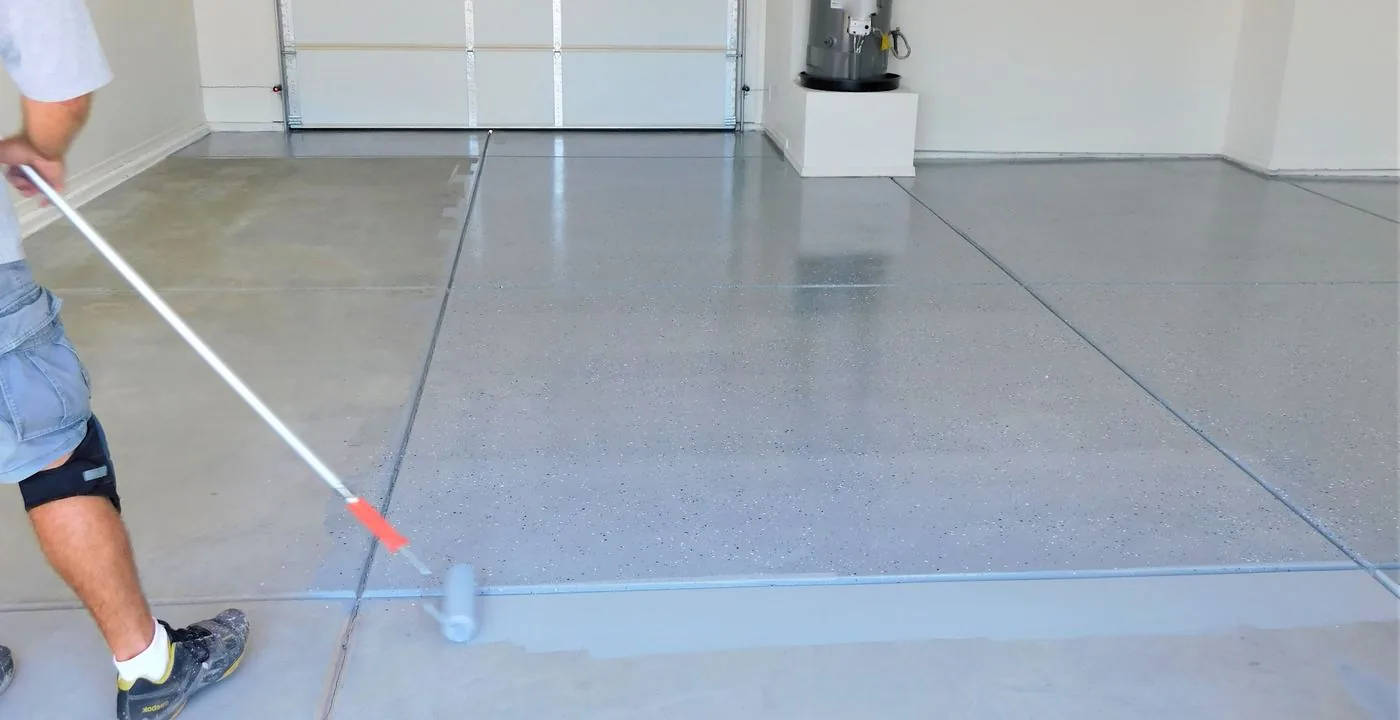
A crew member rolling coating onto a prepared floor

The crew mixes small batches, pours, and rolls immediately. The payoff is that coats can follow each other within hours instead of the next day, which is why a polyaspartic-topped system can sometimes be finished in fewer visits.

Epoxy goes the other direction. A long working time lets a crew spread, back-roll, broadcast flake and fix a missed spot without racing the bucket. The cost is waiting. Between coats epoxy usually wants an overnight window, and the floor needs several days before it carries a parked vehicle or heavy loads.

Be careful with the phrase "ready in a day." Foot traffic and driving are different thresholds, and neither equals full chemical cure. Data sheets typically give separate numbers for light foot traffic, vehicle traffic and full cure, measured at a stated temperature. A cold, damp garage in February will run behind those numbers. Ask for the sheet and the dates, not the slogan.

UV stability and yellowing

Key point

This is the clearest difference between the two.

Standard epoxy has an aromatic backbone that absorbs ultraviolet energy. Over months of sun the surface oxidizes: clear epoxy ambers, light colors dull and chalk, and the effect shows first near garage doors and windows where light lands on the floor. It is cosmetic at first, but a chalky surface also wears faster.

Polyaspartic has an aliphatic backbone and stays clear. That is why it has become the standard topcoat on decorative floors, patios and any slab that sees daylight. If your floor will sit in front of an open door, or you have a sunroom, covered porch, or a garage with big south-facing windows, a UV-stable top layer is not a luxury.

Not every polyaspartic is equal, and not every epoxy ambers at the same speed. Some epoxy topcoats are modified for better color retention, and some aromatic polyureas yellow too. The data sheet should say whether the product is aliphatic. If it does not say, ask.

Where each coating wins and loses

Six real-world points that come up in nearly every comparison.

Hot-tire pickup

Pickup happens when tire heat softens a film and lifts it as the car moves. Polyaspartic generally resists it well. Epoxy can too, but only when fully cured, thick enough and free of contamination. Thin, rushed or poorly mixed epoxy is the usual culprit.

Thickness and build

Epoxy makes thickness easy. A single pass can leave a heavy film that hides minor slab texture. Polyaspartic goes down thinner per coat, so reaching a robust total often takes two coats, or a thicker epoxy beneath it.

Chemical resistance

Both resist common garage fluids like oil, brake fluid, antifreeze and road brine. Strong solvents, battery acid and some cleaning agents can stain or etch either one, so shops and plants should match the product to the exposure list.

Abrasion and impact

Polyaspartic clears are hard and scratch-resistant. Epoxy is hard but can chip at edges under heavy point impact. In both cases an aggregate or flake broadcast adds traction and hides wear.

Flexibility

Polyaspartic tolerates slight slab movement better, which helps at hairline cracks and cold-weather contraction. Neither one bridges a moving crack unless the crack is treated first.

Appearance

Epoxy tends toward a deep, glossy, almost liquid look, especially in metallic and solid colors. Polyaspartic clears are crisp and slightly harder in feel. Either can be gloss, satin or matte depending on the product.

Moisture, primers and the slab underneath

Key point

Most failures blamed on a coating are really moisture or preparation failures.

Many DMV slabs from the 1950s to the 1970s were poured without a vapor barrier underneath, so ground moisture moves up through the concrete during humid summers and wet springs. A coating over that slab becomes a lid, and vapor pressure pushes against it from below.

Neither epoxy nor polyaspartic is automatically a moisture barrier. Some epoxy primers are formulated for moisture mitigation and are rated under ASTM F3010 for a stated level of in-slab relative humidity. Polyaspartic generally wants a dry slab and is less forgiving of damp concrete during application, because moisture can interfere with the reaction and show up as bubbles or pinholes.

The professional answer is to test first. In-slab relative humidity testing under ASTM F2170 measures the concrete itself rather than its surface, and it tells you whether the slab is low enough for a standard system or needs a moisture-rated primer. A floor that fails the test is not a lost cause. It simply needs the right primer, and sometimes a different system altogether.

  • Test the slab before choosing a product, not after.
  • Match the primer to the measured moisture level and read its limit.
  • Grind the slab to a suitable profile so the primer can grip.
  • Treat finished basements and below-grade rooms as higher risk.

Temperature, humidity and the install window

Key point

Epoxy is picky about cold. Below the slab temperature on the data sheet, cure slows dramatically and the surface can develop a greasy film that interferes with the next coat.

It also tolerates a lot of humidity during the pour, as long as the slab is above the dew point.

Polyaspartic is more forgiving of cool air. Several products list application windows from roughly the low 40s Fahrenheit up through the 90s, which is why installers lean on it in shoulder seasons. The catch is the other end: in summer heat and high humidity, pot life collapses and bubbles or roller marks become more likely. Early morning starts, shaded work and small batches are how crews manage that.

Dew point deserves a mention for both. If the slab is within a few degrees of the dew point, moisture condenses on the surface and the coating can fail to bond. Humid DMV summer mornings are exactly when this happens, and a careful installer measures it instead of guessing.

Odor and ventilation

Key point

Both coatings are chemical products and deserve ventilation.

Epoxy gives off a moderate smell that fades over a day or so. Polyaspartic can smell stronger during mixing and application, then clear sooner as it cures. Solvent-containing products smell more than 100 percent solids ones.

For an attached garage, crews usually keep the house door closed and seal the threshold, run fans, and use proper respirators. Homeowners with sensitive family members or pets should ask for the product data sheet and schedule the work for a day when windows can stay open.

Repairs and recoating years later

Key point

Floors get scratched, hit by dropped tools and stained by leaks.

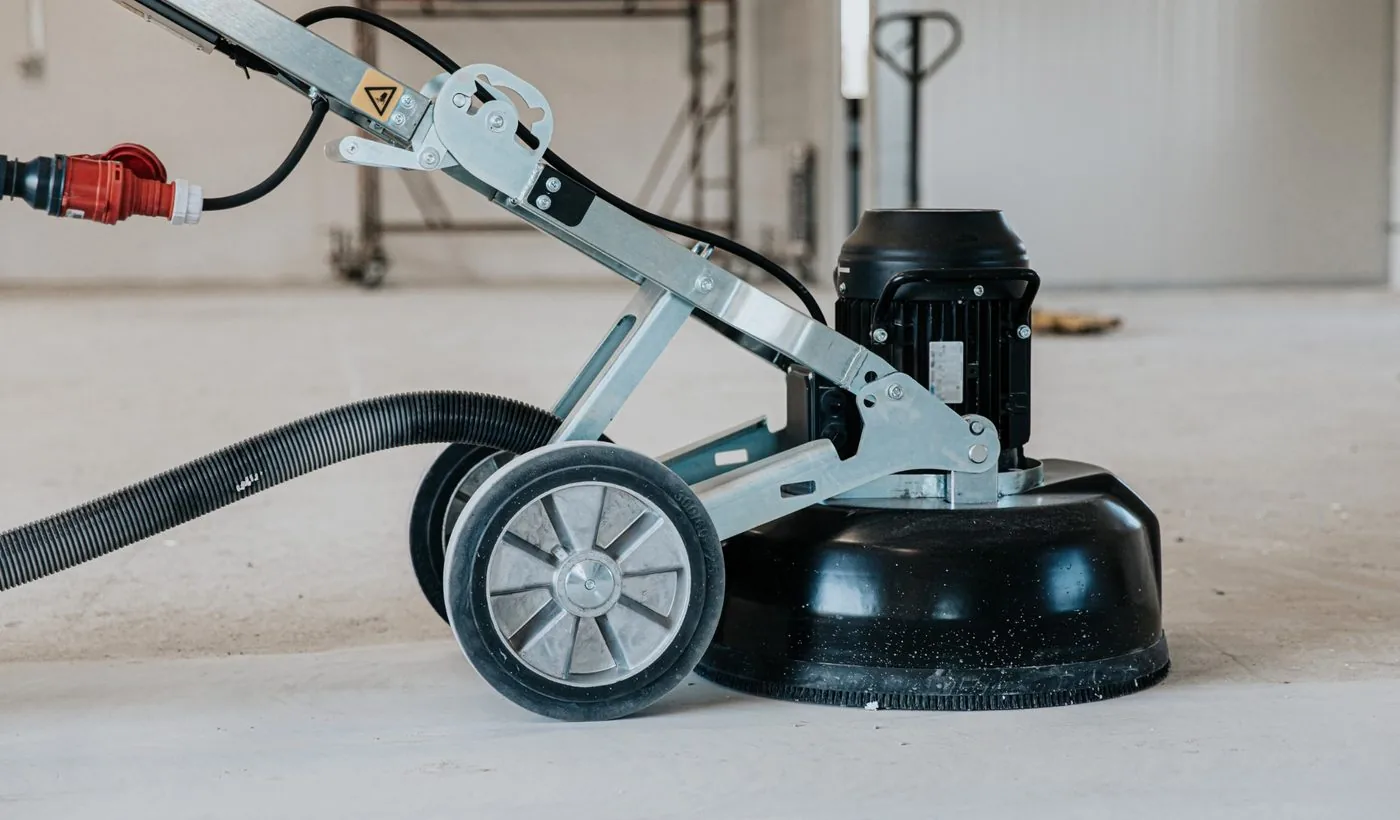
A diamond grinder preparing a concrete slab

Epoxy, being heavy-bodied and solid colored, is easy to spot repair when the color is uniform, although the patch may show against a UV-aged neighbor. Decorative flake hides patches well, which is one reason it is popular.

Polyaspartic can be recoated, but timing matters. A fresh recoat bonds chemically to a coat that is still within its recoat window. After that window closes, the old surface must be scuffed or lightly abraded so the new layer has something to grip. Contaminated or glossy surfaces without scuffing are where recoats peel.

In both cases the first question is whether the damage is cosmetic or a bond failure. Cosmetic wear can be refreshed with a new clear coat. Where the coating has lifted from the concrete, the loose material should be removed, the area ground, and the repair feathered in, otherwise the failure creeps outward.

Decision table: which one for your space

A starting point for the conversation, not a replacement for a site visit and a moisture test.

SpaceUsually best fitWhyWatch for
Attached garage with sun and daily drivingEpoxy base, polyaspartic clearTough base plus UV-stable, tire-friendly topSlab moisture, fast pot life in summer
Garage in a townhouse or HOA communityCombination system, decorative flakeHides road salt marks and dust; quick return to useShared walls and ventilation rules
Basement, finished or unfinishedMoisture-rated epoxy primer, epoxy or urethane topcoatSlab moisture is the main risk, not UVTest RH first; skip polyaspartic on a damp slab
Workshop or hobby garageEpoxy base with polyaspartic clearBuild for impacts and spills, hard clear for scratchesChemical exposure list, rolling toolboxes
Commercial shop, showroom, retailOften epoxy or polyaspartic over an epoxy baseAppearance and downtime both matterSchedule, traction, health or safety rules
Warehouse or industrial floorThicker epoxy or other heavy-duty systemsFilm build and load capacity come firstForklift traffic, joints, thermal shock
Outdoor patio or covered porchPolyaspartic over a suitable primerUV stability and freeze-thaw toleranceSlope, drainage, slip resistance

If a contractor gives you the same answer for all seven rows, ask why.

Combination systems: epoxy base with a polyaspartic topcoat

The most common professional garage floor is not a choice between the two. It stacks them. After diamond grinding and crack repair, a primer goes down, then an epoxy base coat gives the floor its body. If decorative flakes are wanted, they are broadcast into the wet base. A polyaspartic clear then seals everything in.

The logic is simple. Epoxy does the jobs it is best at: grip the concrete, build film, and take up slab imperfections. Polyaspartic does the jobs it is best at: resist ultraviolet light, hot tires and scratches, and cure quickly enough that the floor returns to service sooner. You get a strong foundation and a durable face. You can see how this plays out in a full garage floor system.

It also manages risk. Because the epoxy base carries most of the thickness, a thin or imperfect clear coat is not the only thing between your tires and the concrete. And because the clear is UV-stable, the floor does not drift toward amber as the epoxy beneath ages.

There is no free lunch. Every layer is another bonding surface, and each interface has to be clean, within recoat windows and properly profiled. A combination system installed carelessly can delaminate between layers. That is a workmanship issue, not a flaw in the idea.

When marketing hype misleads

Three claims deserve skepticism. First, "done in one day." A one-day install can be real for some polyaspartic systems under ideal conditions, but it compresses grinding, repair, primer, base and clear into hours. Rushing the cure windows is how floors peel in the first year. Ask what steps were shortened and why.

Second, claims that a floor never needs replacing, or that it will last for decades. No coating is permanent, and any written protection is a legal document with exclusions, and the product itself is covered, or not, by a data sheet. If a company promises the floor will never fail, ask which product, ask for the data sheet, and read what the paper actually says about moisture, hot tires and surface wear.

Third, "stronger than concrete" and "indestructible." Compressive strength numbers on a data sheet describe a lab specimen, not how a thin film performs after salt, grit and a dropped jack stand. The right question is not how strong the resin is. It is how well it will stay bonded to your slab.

What to ask a contractor before you sign

These questions separate a floor plan from a sales pitch. Any good installer should answer them plainly.

  1. What exactly is in each layer?

    Ask for the name and data sheet of the primer, base and clear. You want the chemistry of each stated, not just "epoxy" or "poly."

  2. How will you prepare the slab?

    The answer should be diamond grinding to a suitable profile, not acid etching, with cracks and joints repaired in writing.

  3. Will you test moisture?

    Ask which method, and what happens if the reading is high. A real plan has a fallback primer.

  4. Is the topcoat UV-stable?

    If the floor sees sun, the clear should be aliphatic and say so on the sheet.

  5. What is the finished thickness?

    Ask for total system build in mils, and how it is achieved across coats.

  6. When can I walk and drive on it?

    Get separate foot, vehicle and full cure times, at the expected temperature, in writing.

  7. What if the slab fails to bond?

    Ask what repair looks like, who handles it, and what the written terms say, rather than accepting a verbal comfort line.

  8. Who will actually be on site?

    Polyaspartic punishes inexperience. Ask whether the crew regularly applies the product you are being sold.

How installer skill changes the outcome

Key point

Epoxy forgives. A new crew can make a good epoxy floor because the long working time lets them fix mistakes.

Polyaspartic does not forgive. Material that sits in a pan, gets rolled too thin, or overlaps late will show in the cured film as lap lines, bubbles or roller marks. Experienced crews mix in small amounts, work in pairs, and plan every cut line before they open a can.

This is one place where the cheap kit and the professional system diverge sharply. Retail polyaspartic kits ask a homeowner to master a product that professionals practice for years. If you are going to hire a contractor for only one reason, make it this one.

Our own approach to this is straightforward: grind every slab with diamonds, test the concrete for moisture before choosing a system, put crack and joint repair in the written scope, and pick the chemistry for the space instead of for the sales flyer. You can request a free estimate at our contact page and we will walk the floor with you.

Questions

Epoxy vs polyaspartic: common questions

Related services

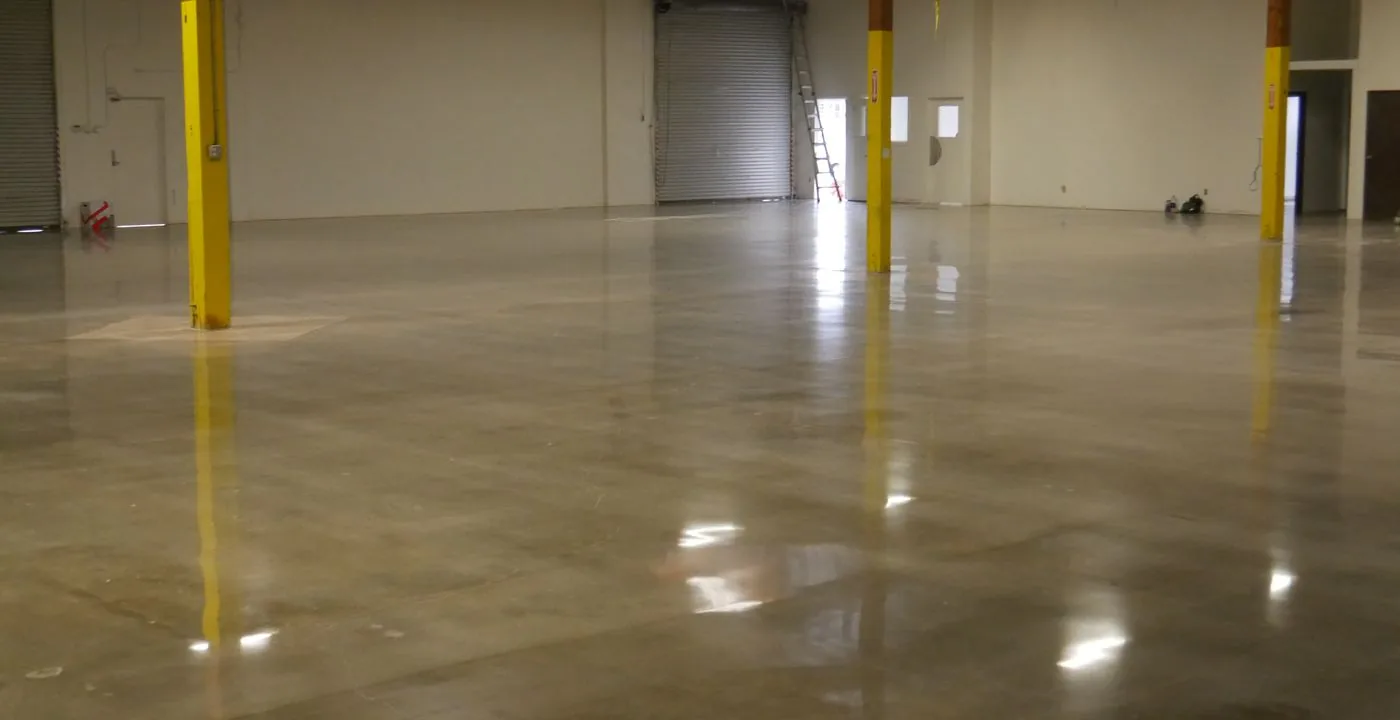
High-gloss gray epoxy floor in a warehouse bay reflecting the overhead lights
Seamless epoxy, warehouse bay
Still have a question?
571-417-5802Free written estimate. No obligation.
What is the difference between epoxy and polyaspartic?

Epoxy is a rigid, slow-curing coating that bonds strongly and builds thickness easily. Polyaspartic is a polyurea-family coating that cures fast, stays clear in sunlight and resists hot tires. Epoxy is usually the stronger base, polyaspartic the stronger topcoat, and the two are often layered together.

Is polyaspartic better than epoxy?

It depends on the job. For UV exposure, speed and a protective clear layer, polyaspartic is usually better. For adhesion, film thickness, forgiveness during installation and moisture-rated primers, epoxy often leads. Many floors use both, with epoxy underneath and polyaspartic on top.

Is polyurea better than epoxy?

Not across the board. Polyurea is faster and more flexible, and polyaspartic is the slower, installer-friendly type of it. Fast-set polyurea is harder to apply and mostly used where schedule drives the choice. Epoxy still has a place wherever deep build and strong bond are the priority.

Is a polyaspartic garage floor coating worth it?

For many garages it is, particularly as a topcoat. It resists yellowing, hot tires and scratches, and it shortens the wait before you can use the floor. It is not worth it over a damp or poorly prepared slab, where it can fail just as readily as epoxy would.

What is the difference between polyaspartic and polyurea garage floor coating?

Polyaspartic is a type of polyurea made with a slower-reacting amine so it can be rolled by hand. "Polyurea" can also mean a faster-setting product usually sprayed by specialists. Companies sometimes use the words interchangeably, so check the data sheet for what is actually in the bucket.

Does polyaspartic yellow like epoxy does?

Properly formulated aliphatic polyaspartic does not yellow from sunlight. Standard epoxy does, which is why epoxy is rarely left as the exposed top layer where light reaches. Confirm the product is aliphatic, because some polyureas are not UV-stable.

Which one handles hot tires better?

Polyaspartic generally handles hot tires well when applied at proper thickness over a sound bond. Epoxy can too if fully cured and thick, but thin or undercured epoxy is the usual source of pickup. Preparation and cure matter as much as the resin.

Can I use polyaspartic in a basement?

Sometimes, but be careful. Basement slabs often carry moisture, and polyaspartic is less tolerant of dampness during application. Test the slab first, use a moisture-rated primer when the reading calls for it, and consider an epoxy or urethane system if the concrete is wet.

How long does each take to cure?

Polyaspartic often allows foot traffic in hours and vehicles within a day or two according to many data sheets. Epoxy usually needs several days before vehicles. Temperature and humidity change both, so ask for the sheet figures at your expected conditions.

Can polyaspartic go over existing epoxy?

Yes, when the epoxy is sound, clean and properly scuffed, and the recoat window and manufacturer instructions are followed. If the old epoxy is peeling or contaminated, it should be removed or ground out first, because a new clear coat cannot fix a failed bond beneath it.

Are epoxy and polyaspartic floors slippery?

Either can be slippery when wet if the surface is smooth and glossy. Decorative flakes, fine aggregate or a textured additive in the topcoat add traction. Ask for a slip-resistant finish where water, snow melt or oils are likely to reach the floor.

What should I choose for a garage in the DMV?

A typical answer is a ground slab, a moisture-appropriate primer, an epoxy base and a polyaspartic clear topcoat, often with decorative flake. That handles road salt, humid summers, winter temperature swings and tire heat. The exact plan should follow a moisture test and a look at your slab. Our garage floor page shows how that system is built.

Keep reading

Want this checked on your floor?

Tell us about your space. We will measure, test the slab and send a free written estimate.

571-417-5802