Based in Alexandria · Serving the DMV

Service

Basement Floor Epoxy in Alexandria, VA

Basement floor epoxy works when the slab is tested, dry enough for the system chosen, and drained properly. Here is how to tell, what to coat with, and when to leave the floor alone.

571-417-5802 or call 571-417-5802
  • Diamond-groundNever acid-etched
  • Moisture-testedBefore any coating
  • Written scopeCrack and joint repair included

Overview

What basement floor epoxy actually is, and why basements are different

Basement floor epoxy is a resin coating bonded to a diamond-ground concrete slab below grade. It turns a dusty, stained, cold-looking floor into a seamless, wipe-clean surface in solid color, flake or metallic. The same resin family goes into garages, but a basement slab sits in a very different environment, and that difference decides whether the floor lasts.

A garage slab is usually exposed to air and often to sun through the door. A basement slab sits directly on soil. Water vapor moves up through the concrete all year, and in a lot of DMV houses there is nothing underneath to stop it. Rowhouses in DC and Arlington, brick colonials in Alexandria and the 1950s through 1970s ramblers and split-levels across Fairfax, Montgomery and Prince George's counties were commonly built when a poly vapor barrier under the slab was not standard practice. Many of those slabs breathe constantly, and a film that does not breathe will eventually be pushed off by the vapor trapped beneath it.

That is the real reason basement epoxy jobs fail. The coating itself is rarely the weak link. Moisture, poor grinding and skipped testing are. This page covers how to judge your slab honestly, which system fits each situation, what a proper install involves, and the cases where we would tell you to fix the water first or choose a breathable finish such as polished concrete instead.

Why so many basement epoxy floors peel

Search for basement epoxy and most of what comes up is kit sellers, video tutorials and forum threads, and the forum threads are full of the same story: it looked great, then it bubbled, lifted in sheets or turned cloudy within a year or two. The cause is almost always one of the same few things.

Epoxy forms a continuous film. Vapor rising through the slab hits that film and has nowhere to go, so it builds pressure at the bond line. Where the concrete is weakest, usually a thin cream layer left by a skipped or light prep, the film lets go. Homeowners often see small blisters first, then lifting at the walls and around the floor drain or sump, where moisture is highest.

  • Vapor drive from the soil, strongest in July and August when warm humid air meets a cool slab and the water table is up
  • Hydrostatic pressure after storms, pushing liquid water through cracks, joints and the cove where wall meets floor
  • Previous sealers, paint or mastic left on the slab so the new resin bonds to the old film instead of to concrete
  • Surface prep done by acid etching or a light scuff instead of mechanical grinding, leaving a slick, low-profile surface
  • Coating applied over slab salts and efflorescence that keep drawing moisture to the surface
  • A thin, single-coat paint-style product sold as "basement epoxy" that was never designed to resist vapor

Test the slab before choosing the floor

The decision about which basement floor to install should come from moisture data, not from a color chart. A slab that reads dry in March may be a different slab after three days of July humidity. We test before we quote a system, and where the readings are borderline we say so and design the system around the risk instead of hoping.

If a contractor offers you a basement epoxy price without asking about water, drainage, sump pumps, past leaks or how the floor behaves in summer, treat that as a warning.

How basement moisture is tested, and what each test can tell you

No single test answers every question. These are the common ones, what they measure and where they fall short.

TestWhat it measuresStrengthLimit
Plastic sheet test (ASTM D4263)Whether moisture collects under a taped sheet over a day or twoCheap and easy; a quick rough screen that anyone can doShows capillary moisture only, gives no number, and can be fooled by room temperature and humidity swings
In-situ relative humidity probes (ASTM F2170)Humidity inside the slab at a set depth, read after the drilled hole equilibrates (24 hours in the current revision)Reads the moisture condition within the slab rather than just at the surface; widely used by resin and flooring manufacturersNeeds calibrated probes, correct depth and stable room conditions; manufacturers set their own acceptable limits
Calcium chloride test (ASTM F1869)Moisture vapor emission rate from the surface over a set period, in pounds per 1,000 sq ft per 24 hoursLong-used, produces a number manufacturers recognizeSurface-only reading, sensitive to ambient conditions, and not the best fit for a slab in a swinging basement environment
Visual and physical cluesEfflorescence, dark patches, damp walls, musty odor, rust at the base of postsFree, and often reveals what the numbers will confirmCannot be quantified and can be absent on a slab that still passes vapor

The test limits that apply come from the technical data sheet of the specific primer and coating being used, not from a universal number. A reading that is acceptable for one system can rule out another.

Epoxy system options for a basement floor

Which finish is best depends on how the room will be used and what the slab can tolerate. Look and moisture tolerance are separate choices.

Moisture-mitigating primer plus solid color

A two-component membrane primer designed for high-moisture concrete, followed by pigmented epoxy and a clear or tinted topcoat. Our default for laundry rooms, utility areas and basements that read borderline in testing.

Flake system

Vinyl chip broadcast into a pigmented base, then sealed. The texture hides slab imperfections, adds traction near a walk-out door or laundry, and masks the small flaws older slabs always have. See our flake systems for the full build.

Metallic epoxy

Hand-worked pigments that swirl into a lava-like or marble-like look. The finished basement favorite for media rooms and bars. Needs a flatter, better-prepped slab to look its best. See metallic epoxy for color and design detail.

Quartz-broadcast

Colored quartz sand broadcast into resin for a durable, textured, slip-resistant floor. Useful for basement gyms, workshops and steps down to the yard.

Polished concrete instead

A mechanically refined slab with a penetrating densifier and no surface film to trap vapor. Often the right answer where moisture is a worry. See polished concrete.

Grind and seal

A clear protective film over ground concrete when you like the natural look of the slab. Faster than a full system, and discussed on our grind and seal page.

Finished versus unfinished basements

Key point

An unfinished basement with a utility sink and a washing machine can tolerate a utilitarian floor.

A flake or solid color system there is easy to hose, resists detergent and rust stains from the water heater, and makes spills visible. Moisture may still be present, but the cost of failure is a re-coat, not a gutted room.

A finished basement raises the stakes. Once there is carpet pad, wall studs, drywall and furniture on top, any failed coating means pulling everything out. That is where the testing and the primer choice matter most. If you are finishing the space, coat the slab before framing begins when you can, and discuss the sequence with your general contractor. Epoxy on a bare slab is far easier to do well than epoxy squeezed around finished walls, where the floor-to-wall edge is hard to prep and mask.

If you plan to cover the floor with a rug, LVP or carpet later, you may not need a coating at all, or you may only need a moisture-mitigating primer under the new flooring. Telling you that is part of what a testing visit is for.

Basement conditions and what they usually mean for the coating decision

These are general guidelines, not a verdict on any specific house. Only an on-site assessment and test numbers settle it.

What you seeWhat may be going onTypical direction
Slab looks and tests dry, no staining, no musty smellGood vapor condition, possibly a vapor barrier or well-drained lotStandard system after grinding and repair is usually a safe fit
Dark patches in humid weather, damp at the wallsVapor drive or condensation on a cool slabTest, then a moisture-mitigating primer system or a breathable finish
White powder or crust on the slabEfflorescence: salts carried by moisture to the surfaceFind the source, grind off the salts, test again, then decide
Water at the wall base after heavy rainHydrostatic pressure or an exterior grading or gutter problemFix drainage first; do not coat until the slab stays dry
Visible active seepage through cracks or the jointLiquid water entryNot a coating job; waterproofing or drainage work comes first
Old paint, sealer or floor tile mastic on the slabExisting film or adhesive that must be identified before grindingTest and plan the removal; some older mastics can contain asbestos and need a qualified abatement plan

No coating, including a moisture-mitigating primer, replaces drainage correction, gutter and grade fixes, or a working sump system.

How a basement epoxy install is done properly

The sequence below is how a well-run system is typically installed. Exact materials and cure times follow the chosen product's data sheet.

  1. Walk-through and moisture assessment

    We look at the slab, the walls, the drains and the sump, ask what the floor does in July and after storms, and take moisture readings. We also note ceiling height, stairs, egress and what has to be moved. This visit decides the system.

  2. Clear the room and protect the house

    Furniture, water heater clearances and stored items are cleared, finished walls and stair trim are masked, and dust control is set up. Grinding in a basement makes fine dust, so containment matters.

  3. Diamond grinding

    Planetary grinders with diamond tooling remove paint, sealer, laitance and stains and open the slab for bonding. Edges and corners are detailed by hand. We never acid etch.

  4. Crack, joint and spall repair

    Cracks and control joints are cleaned and filled with a rigid repair material, and low spots or divots are patched so they do not telegraph through the finish. Repair is part of the written scope.

  5. Second moisture check and primer

    With the surface open, readings are taken again. Where numbers call for it, a moisture-mitigating primer is installed to the manufacturer's coverage and cure window. Otherwise a standard penetrating or bonding primer goes down.

  6. Base coat and decorative layer

    Pigmented epoxy is rolled or squeegeed. In a flake system, chips are broadcast to rejection while the base is wet. In a metallic system, pigments are worked by hand across the film.

  7. Scrape, sweep and topcoat

    Loose flake is scraped and vacuumed, then a clear urethane or polyaspartic topcoat is applied for abrasion, chemical and UV protection. A fine anti-slip additive can go in near stairs and walk-out doors.

  8. Cure, ventilation and handoff

    Fans keep air moving through the cure. You get walk-on, furniture and heavy-use timing for the actual system, plus cleaning guidance.

Radon, sump pumps, floor drains and cracks

Basements in much of the DMV are in radon-prone areas, and a basement floor is one of the main routes radon takes into a house. The EPA recommends sealing openings, cracks and crevices in the concrete floor, including the slab perimeter crack, with polyurethane caulk. Careful crack repair during a coating job can support that, but a floor coating is not radon mitigation. If you have never tested, test before and after the work. Where a radon system is planned, tell us so the pipe, the slab penetration and the sump cover can be detailed rather than coated over.

Sump pits and floor drains need planning. The coating should terminate neatly at the pit rim without blocking access to the pump. Floor drains should stay open and slope toward the drain; we do not coat over a drain or change the way water leaves the room. A drain that backs up, a sump that runs constantly after storms or a pit that overflows tells you the basement has a water problem to solve first.

Cracks matter as well. Hairline shrinkage cracks are normal and get filled. Wider, offset or leaking cracks are structural or waterproofing questions that need a foundation or waterproofing professional before any floor finish is selected.

Ventilation, ceiling height, egress and basement apartments

Key point

Basement air does not move much, so cure odor lingers.

Epoxy systems vary in how much odor they give off. Good basement work uses fans, an open window or door where possible, and a schedule that keeps people and pets out until the odor has dissipated. If anyone in the house is sensitive to smells, say so early because it affects product selection.

Ceiling height and stairs matter too. A coating adds only a thin layer, so it will not noticeably change headroom, but we plan the work around low beams, ductwork and the bottom treads so the stair edges and transitions are handled cleanly. Keep egress windows and exterior doors clear and usable during the work, since they double as ventilation and as your emergency exit.

If the lower level is a rented unit or an accessory dwelling, local rules on egress, ceiling height, fire separation and permitted finishes depend on the jurisdiction, and DC, Arlington, Alexandria and the Maryland counties do not all treat them the same way. Ask your local permitting office what applies to your unit. A coating generally is a surface finish, not a code fix, so do not rely on it to solve a legal question.

Humidity, freeze-thaw and DMV conditions

Key point

The DMV has hot, humid summers and cold, damp winters.

In summer, warm moist air moves into a cooler basement and condenses on the slab, so the floor can read much wetter in July than in April. A basement dehumidifier running steadily is often the cheapest improvement you can make to the space, with or without a coating.

Road salt matters in winter, mostly for walk-out basements and entry areas, where boots and wet tracks bring brine inside. A cured topcoat resists it, but the floor still needs a damp mop once in a while. In rowhouses and old brick homes, the foundation walls themselves can wick water. That is another reason to look at the walls and not only at the floor.

Cleaning, upkeep and what to ask a contractor

Key point

A cured basement epoxy floor needs little. Dust mop or vacuum, then damp mop with a neutral cleaner.

Wipe up spills from the water heater or laundry quickly. Use felt pads under furniture and avoid dragging heavy equipment. A gym floor takes mats under weights. Heavy use may need a fresh clear coat after some years, which is cheaper than starting over.

Before you hire anyone, ask the questions below. The answers tell you whether the contractor will test or guess.

  • How will you test the slab for moisture, and will I get the readings in writing?
  • What is the plan if the readings are high?
  • Do you grind the slab, and with what, instead of etching?
  • How will you handle cracks, the sump pit and floor drains?
  • How will you control dust and cure odor in a finished house?
  • What would make you advise against coating this floor?
  • What is in the written scope, and what is excluded?

What affects the cost of a basement epoxy floor

We do not publish numbers because the variables are specific to your house. The main factors are the size of the basement and how much has to be moved, the slab condition and the amount of crack and spall repair, whether old paint, sealer or mastic must be removed, the moisture results and whether a mitigating primer is needed, the system you choose (solid, flake, quartz or metallic), the topcoat, and the access: stairs, narrow doors, finished walls and ceiling height. We give a free estimate after seeing the room, and you can reach us on the contact page.

Questions

Basement floor epoxy questions homeowners ask

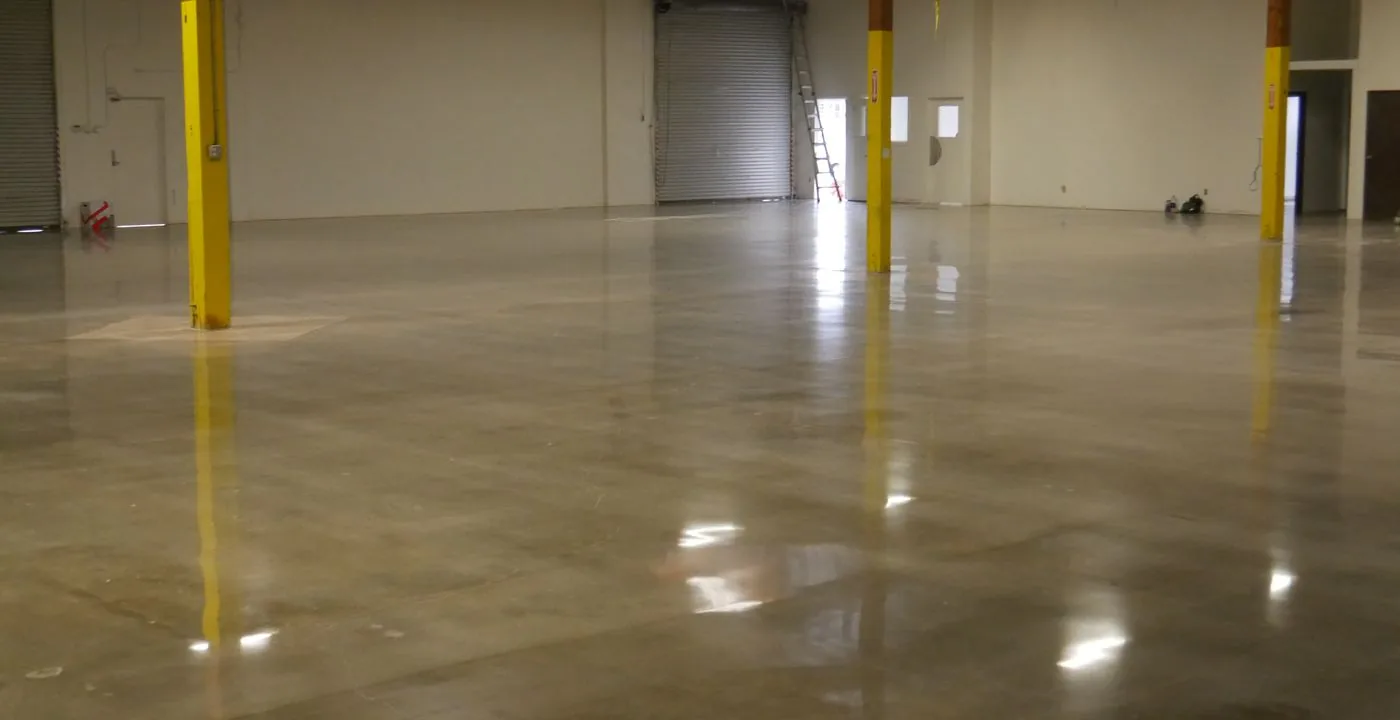
High-gloss gray epoxy floor in a warehouse bay reflecting the overhead lights
Seamless epoxy, warehouse bay
Still have a question?
571-417-5802Free written estimate. No obligation.
Can you epoxy a basement floor?

Yes, if the slab is sound and the moisture condition is acceptable for the system chosen. Basements are harder than garages because the slab sits against soil, so moisture testing and a correct primer decide the outcome. If the floor has active leaks or standing water, the drainage needs to be fixed first.

Why does epoxy peel in basements?

The usual causes are water vapor or liquid water moving up through the slab, poor surface preparation, old coatings left underneath, and thin paint-style products that were never meant to resist vapor. A diamond-ground slab, a moisture test and a primer that matches the readings address most of those.

How do I know if my basement is too wet for epoxy?

Look for efflorescence, dark damp patches, musty smell and water at the wall base after rain. A taped plastic sheet is only a rough screen. Relative humidity probes in the slab (ASTM F2170) and calcium chloride testing (ASTM F1869) give a better picture, and the limits come from the coating manufacturer.

Does the plastic sheet test work?

It is a quick screen for capillary moisture, and ASTM D4263 describes it that way. It gives no number, and a dry result does not guarantee a dry slab in July. We treat it as a rough first look, not as proof.

What is a moisture-mitigating primer?

A two-component resin primer intended to reduce the amount of moisture vapor reaching the coating. ASTM F3010 covers this type of system, used after testing shows the slab exceeds the limits. It reduces risk, but it does not fix leaks or replace drainage correction.

Is epoxy or polished concrete better for a basement?

It depends on the moisture. A polished or sealed-with-penetrant slab has no thick film to trap vapor, so it often suits damp basements. Epoxy gives a seamless, colorful, chemical-resistant surface and works well when the slab is dry or properly mitigated. See our polished concrete page to compare.

Can you epoxy over existing paint or tile glue?

The paint or sealer generally has to be ground off so the resin bonds to concrete. Old black mastic and some old floor tiles can contain asbestos, so have suspect material identified before anything is sanded or ground, and use a qualified abatement firm if needed.

Is epoxy slippery in a basement?

A smooth gloss finish can be slick when wet. Flake and quartz systems add texture, and a fine anti-slip additive can go into the topcoat of a metallic or solid color floor near stairs, laundry areas and walk-out doors.

Does epoxy help with radon?

A coating is not radon mitigation. Sealing cracks and openings in the slab is part of the EPA's guidance, and a repair step in a coating job can contribute, but the way to know your level is to test, and the way to reduce it is a mitigation system installed by a qualified professional.

How long does it take?

Most basements take a few days for grinding, repair, primer, base, decorative layer and topcoat, with cure time between coats. The exact schedule depends on the system, the size and the basement temperature, and we confirm it at the estimate.

What about the smell?

Fresh coatings have a cure odor, and basements hold it. Fans and an open window or door help, and we plan the schedule so the home is not occupied in the worst of it. Tell us beforehand if anyone is sensitive to odors.

Will a basement epoxy floor feel cold?

Yes, a coating sits on the same slab, so it will not feel warmer than bare concrete. Area rugs, slab temperature and room heating are what change comfort. Epoxy does not insulate the floor.

Helpful guides

Ready for a basement floor epoxy floor?

Tell us about your space. We'll recommend the right system and send a free estimate.

571-417-5802