Slab condition and age
New versus existing is the first fork. Existing slabs bring stains, patches, coatings and unevenness. The more history, the more prep.
Cost & Planning
Polished concrete is priced by how much work your slab needs, not by a flat rate. Here is every factor that moves a quote, so you can compare bids fairly.
If you search for polished concrete floor cost, you will find a lot of round numbers and very few explanations. That is because the number is the output of a long list of decisions about your particular slab. Polishing is a subtractive process. A crew grinds away the top of the concrete in stages, using diamond abrasives that get finer each pass, then hardens the surface with a densifier and burnishes it to the gloss you chose. Every one of those stages is labor and equipment time, and the amount of each depends on what the slab looks like before anyone touches it.
That is why two quotes for what sounds like the same floor can differ widely and both be fair. One contractor may be pricing a quick honed finish over a clean new slab. Another may be pricing a full-exposure floor over a 1960s slab with old adhesive, patched trenches and paint overspray. This guide walks through the factors that change the scope, in rough order of how much they matter, so you can tell a thorough quote from a thin one.
We are not going to put numbers on the page, because any figure we gave you would be wrong for your house. What we can do is show you which questions change the answer, what each choice buys you, and where the cheaper alternatives (like grind-and-seal) are the smarter call. If you are weighing options for a home, the same thinking applies to a polished concrete floor in a basement, a main level or a garage. If you are comparing it to a coating, keep reading to the comparison table.
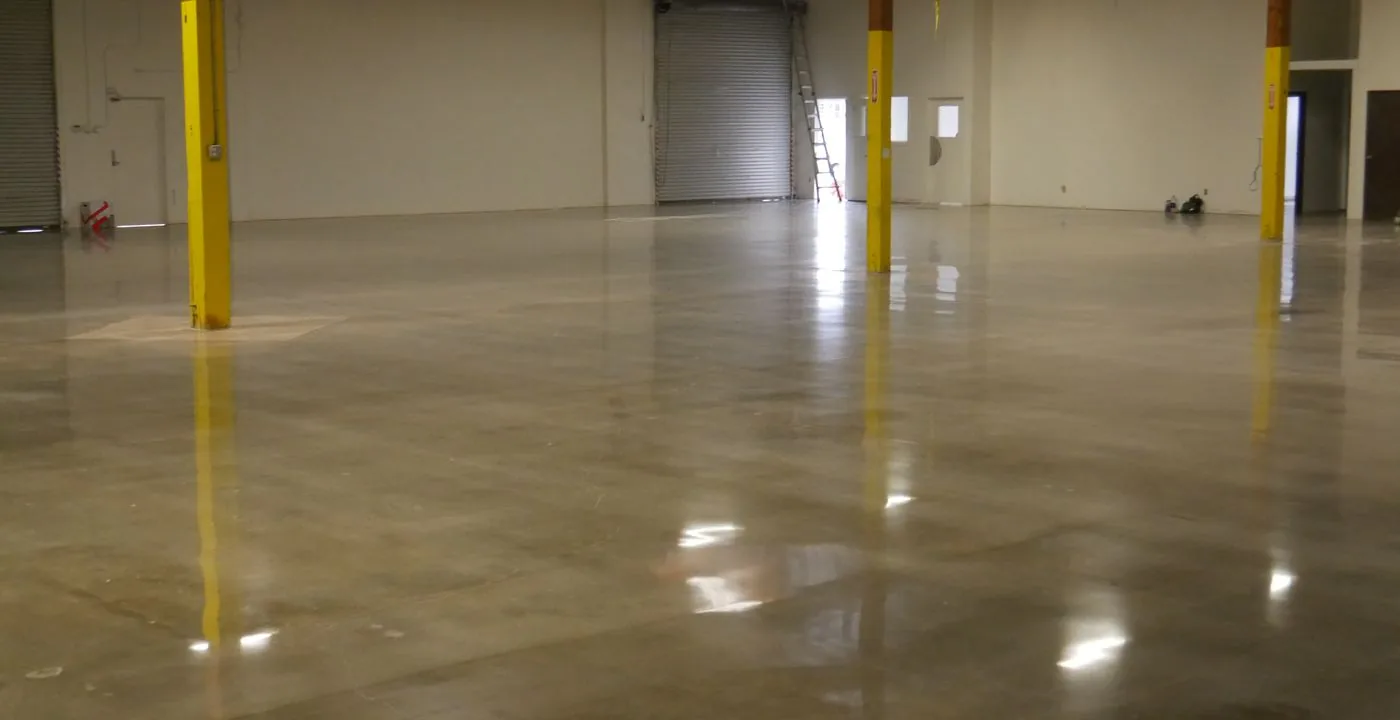
Before gloss, before color, before anything on a spec sheet, the slab sets the baseline. A new, flat, clean slab that was finished with polishing in mind is the easiest case. Most floors in the DMV are not that. They are existing slabs poured decades ago for a different purpose, and they arrive with history.
Older homes in Alexandria, Arlington and DC were often poured without the vapor barrier and finishing care that a floor meant to be seen would get. Rowhouse basements may have uneven sections where drains were relocated. Garages carry oil stains and years of road salt. Finished basements carry adhesive from carpet tile, mastic from old vinyl, paint from a workshop and the odd patch that does not match the surrounding concrete.
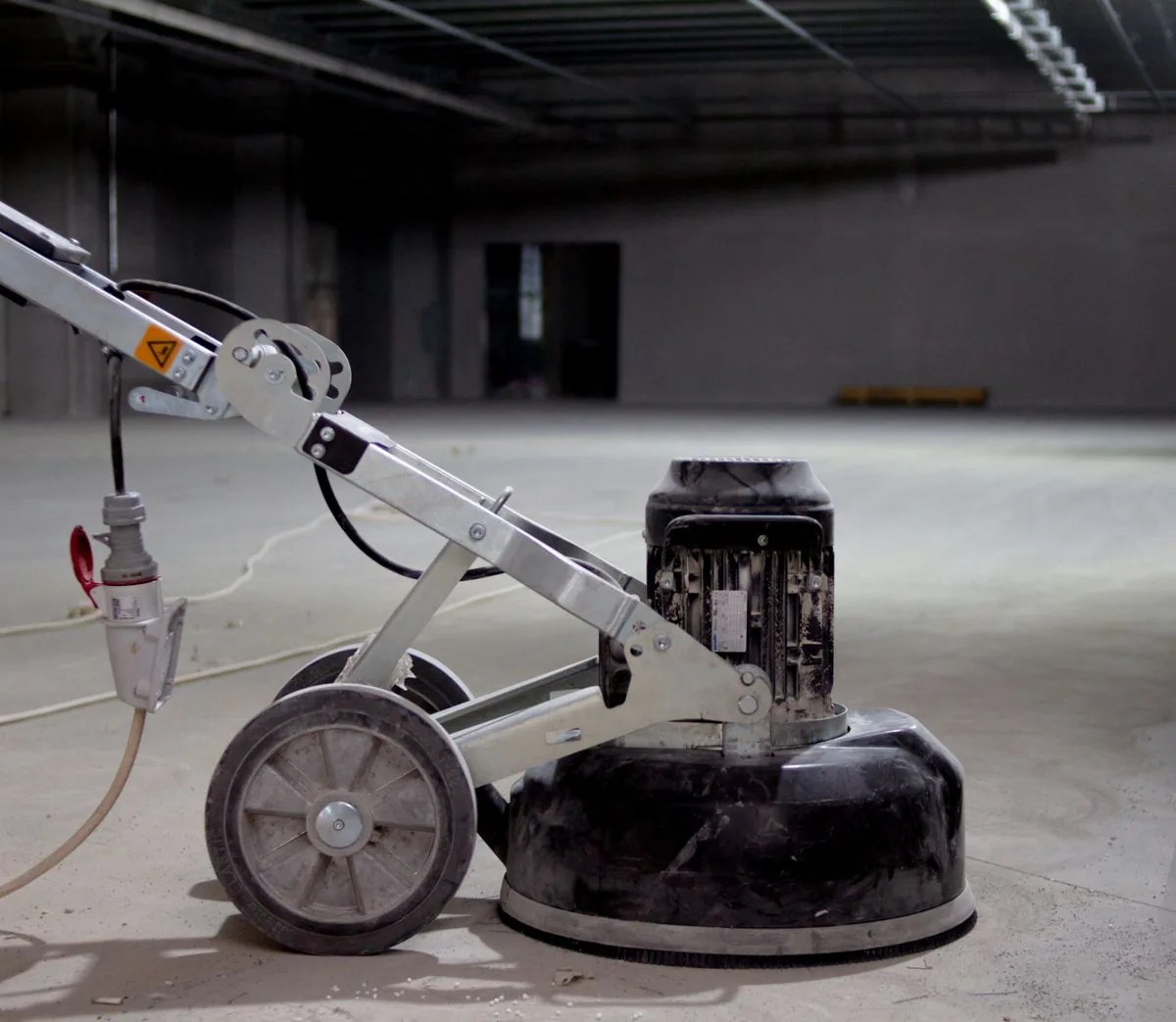
Each of those conditions adds a step before polishing can begin. Removing mastic or paint takes aggressive tooling and extra passes. Filling cracks and spalls takes materials and cure time. Leveling a high spot takes more grinding than a polish pass ever would. None of this shows up on a glossy photo, and all of it shows up on the quote.
These are the factors that change a polished concrete scope. Not all of them apply to every job, but a good quote will address each one that does.
New versus existing is the first fork. Existing slabs bring stains, patches, coatings and unevenness. The more history, the more prep.
A refined finish needs a progression through coarse metal-bond diamonds into finer resin-bond pads. More steps mean more time on the floor, and skipping steps shows up as swirl marks or a dull finish.
Satin, semi-gloss and high gloss are different amounts of work. A higher gloss means finishing through finer abrasives and more burnishing.
Cream (just the paste), salt-and-pepper (fine sand showing) and full exposure (larger stone showing) mean grinding progressively deeper. Deeper cuts cost more time and wear.
The chemical hardener and stain guard protect the surface and are part of the system. Product choice and number of coats change the scope.
Large machines cannot reach walls, cabinets or columns. Hand-grinding those edges is slow, and homes with lots of corners have a lot of edge.
Polishing is a ladder. A crew starts with coarse metal-bond diamonds that cut and level the surface, then steps through progressively finer tooling to refine it.
In the industry, the end of that ladder is described in terms of gloss, and the depth of the initial cut is described in terms of exposure. Those two choices together are what most people mean when they say "polished concrete."
Exposure is the part homeowners often do not realize is a decision. A cream finish removes only a sliver of the surface and leaves the paste mostly intact. It is subtle and quieter, and it is common in homes. A salt-and-pepper finish cuts deeper and reveals fine sand. Full aggregate exposure cuts deeper still and shows larger stone, which is dramatic but takes longer and depends on the mix in your slab. You cannot ask for stone that is not in the concrete, and an old slab will show what it has, including patches.
Gloss is the other variable. A satin or matte floor stops at an earlier point on the ladder and hides foot traffic marks well. A high-gloss floor goes further and reflects light like a mirror, which also shows scratches, tire marks and wet footprints more readily. Higher gloss is not automatically better. It is a design and maintenance choice. A finished basement rec room and an open-plan kitchen may want different answers.
The honest point for budgeting is simple: the further you push exposure and gloss, the more hours go into the floor. A lower-gloss, cream-exposure finish can look excellent and costs the least of the polished options.
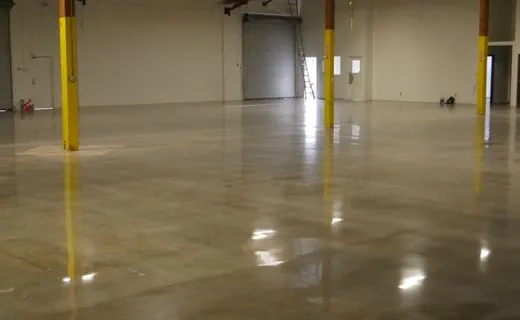
Once the grinding is done, the slab is treated with a densifier.
This is a chemical that reacts with the concrete to harden and tighten the surface, which is what lets it take a high polish and resist dusting. A guard (sometimes called a stain guard or protector) is applied at the end to resist liquids and make the floor easier to clean. These are not optional extras on a well-run polish. They are part of why the floor lasts.
Dye is optional and it is a real cost line. Penetrating concrete dyes can warm a gray floor or add tone, but they go in at specific steps and are hard to correct afterward. Color also behaves differently on every slab, because older concrete may have uneven absorption from patches and past stains. A reputable contractor will run a sample on your floor rather than promise a swatch.
There is one more thing to ask about: how many coats and what type. Some products are rolled or sprayed, some are buffed in. Product selection changes the work, and the work changes the quote. If a bid does not name the densifier or guard, ask what is in the scope. Blank lines on a quote are where surprises hide.
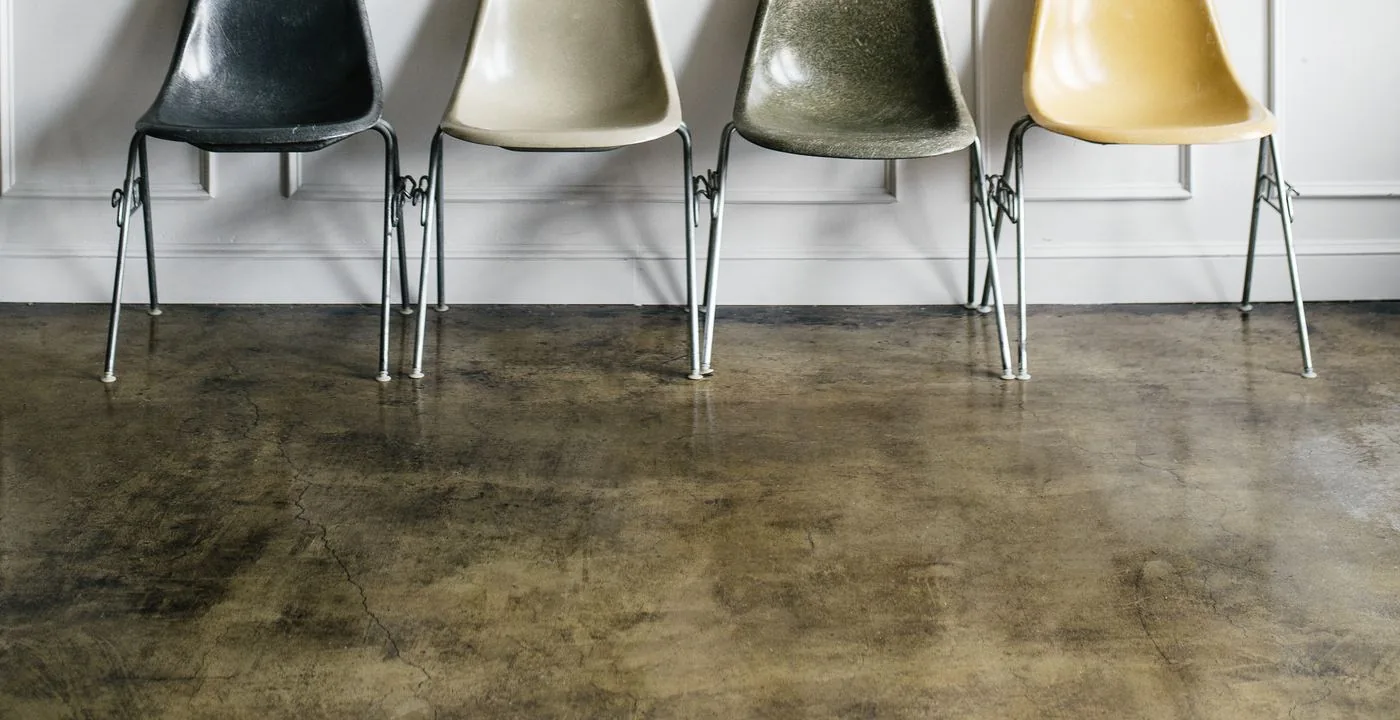
People often search sealed concrete vs polished concrete expecting a simple answer. They are different systems with different upkeep and different failure points. Here is the side-by-side, with epoxy added since it is the third option most homeowners compare.
| Mechanically polished | Grind and seal | Epoxy or similar coating | |
|---|---|---|---|
| What you get | The concrete itself, hardened and refined to a sheen with diamonds and densifier | Concrete ground clean, then covered with a thin clear or tinted sealer | A thicker film bonded to the slab, available in solid color, flake or metallic looks |
| Look | Natural, depth in the concrete, variation from slab to slab | Can look wet or satin; depends on the sealer and how well the slab was prepped | Uniform and colorful, or decorative with flake or metallic effects |
| Moisture sensitivity | Breathes; moisture vapor is less likely to cause delamination but can still cause dark spots | Sealer can trap vapor and cloud or peel if the slab is damp | Most sensitive to vapor; testing is essential before installing |
| Upkeep | Dust mop and neutral cleaner; occasional re-burnishing or guard refresh in busy areas | Periodic recoating as the film wears; scuffs and wear paths show | Wear in high-traffic lanes can need a recoat; chips and gouges can be repaired |
| Where it fails | Poor slab, shallow polish, or harsh cleaners dull it; not rescuable if the slab is too thin or patched | Peels or whitens where moisture, hot tires or spills attack the film | Delaminates from moisture or poor prep; can scratch and yellow in some products under UV |
| Best for | Basements, living areas, retail and spaces that value a natural look | Budget-conscious spaces and garages where a protective film makes sense | Garages, workshops and areas that need color or chemical resistance |
Specific products and slab conditions change the picture. This table is a general guide, not a promise for any one floor. Our grind and seal and metallic epoxy pages go deeper on each alternative.
Grind-and-seal is what many shops quote when a customer says they want a shiny concrete floor on a tight budget.
The slab is ground to remove surface contamination, opened up for adhesion, then covered with a sealer. It can look good and it is usually faster, because it skips the multi-step refinement and densifier chemistry.
It is not the same thing as polished concrete, and a good contractor will say so plainly. The shine in a grind-and-seal floor comes from the film on top, not from the concrete. That film can scratch, scuff and wear through, especially in traffic lanes, and it eventually needs recoating. Polished concrete wears more gracefully, because the surface itself is what was refined.
Grind-and-seal is a reasonable choice for slabs that are not good polishing candidates (heavily patched, inconsistent, or limited in thickness), for garages, and for projects where the schedule matters. It is a poor choice if the slab is damp, because film sealers can trap moisture and turn cloudy. That is another reason moisture testing belongs in the conversation before any system is chosen.

A fair quote starts with a diagnosis, not a price. Several conditions can rule polishing out or force a different system, and you want to hear about them early.
Thin slabs are one. Deep grinding removes material, and a slab that is already thin or poorly reinforced may not tolerate the cuts needed for a refined finish. Heavily patched slabs are another. Patch material rarely takes polish the same way as the surrounding concrete, so repairs show as different shades or textures. Slabs that were finished with a curing compound or sealer may need extra prep before densifier can penetrate. And slabs covered in old mastic, which may contain hazardous materials in homes of a certain age, call for a different conversation entirely and sometimes professional testing before anyone grinds.
Moisture matters in the DMV. Many older slabs were poured without a vapor barrier, and humid summers push vapor upward. Industry practice is to test before committing: calcium chloride tests (ASTM F1869) and in-situ relative humidity probes (ASTM F2170) are the standard tools. Polished concrete tolerates moisture better than a film coating does, but test results still shape the recommendation and can steer you toward a breathable system or away from a thick film. DST tests moisture before coating, and the same mindset applies when polishing is on the table.
No slab is perfect. Cracks, saw-cut joints, control joints and old anchor holes are all normal, and what you do about them changes both the look and the scope.
Fine cracks can often be filled with a flexible or rigid repair material during prep. Larger cracks and spalled edges need more work and may remain visible no matter how good the repair is.
Joints are a design decision as much as a repair one. Control joints are there so concrete can crack where you want it to. Filling them gives a smoother look and a more cleanable floor, but it also changes how the slab moves. A thoughtful contractor will explain which joints to fill, which to leave and why. Crack and joint repair belongs in the written scope, not in a handshake.
Be realistic about what repair can achieve. A patched crack in a polished floor will usually remain visible as a line or a slight color shift. That can be part of the character of concrete, and many homeowners like it, but it should be a choice made with eyes open.
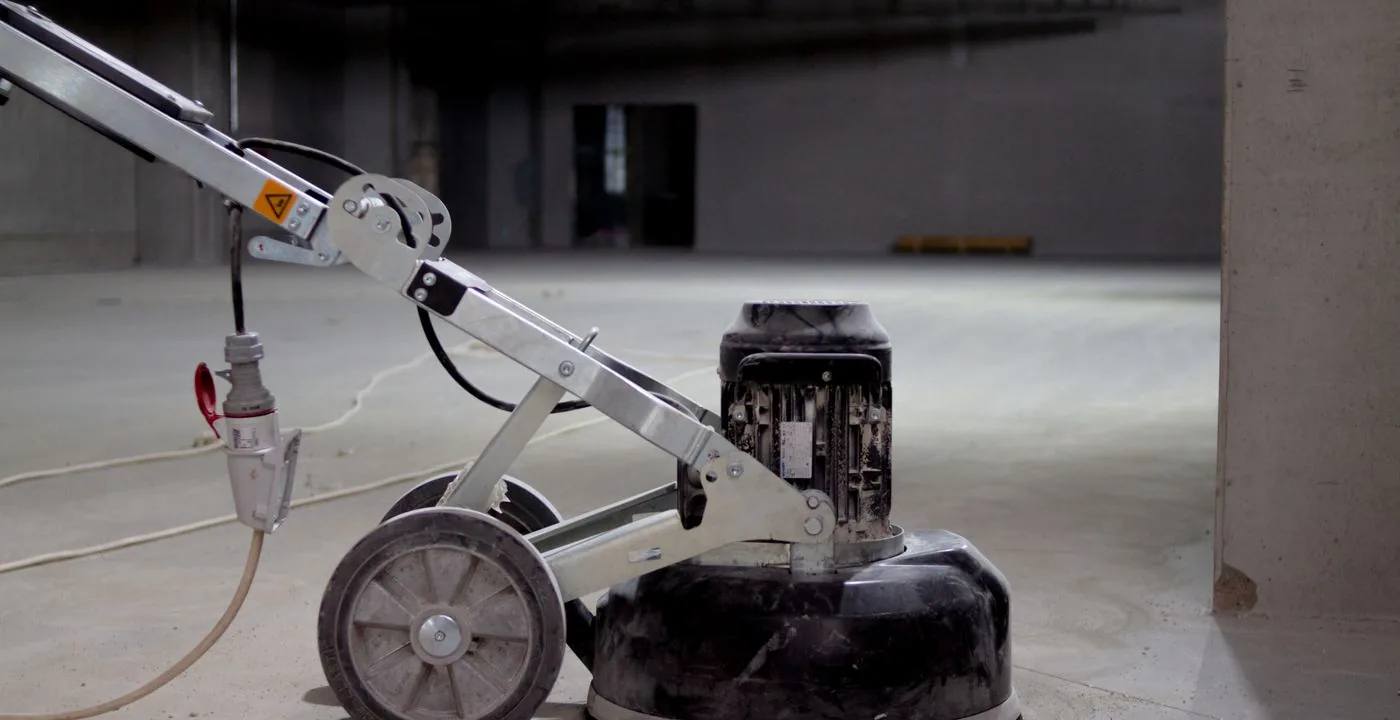
Square footage matters, but not in a straight line.
Larger floors benefit from efficiencies, because machine setup, material mixing and mobilization are spread across more area. Very small rooms can cost proportionally more because setup is the same and the edge work dominates.
Layout counts as much as size. A wide-open basement is easier than a series of small rooms with doorways, stairs, support columns and a furnace in the middle. Every column and cabinet is edge work. Every doorway is a transition to plan. Dust control, water handling and power access also depend on the building.
Phasing is another cost factor, especially in occupied homes and commercial spaces. If you need the kitchen usable at night, or a business open during the day, the work may need to be split into zones, which adds mobilization and coordination. A project that can have the whole area closed off at once is cheaper to run than one that has to work around people.
Access is practical, not glamorous, but it is real. Third-floor condos, rowhouse basements reached by narrow stairs and townhouse garages with little room to stage equipment all change how a crew works, and how long the work takes.
A residential polished floor and a commercial one are not the same product at the same scale.
Homes usually prioritize appearance, comfort and resale appeal. Commercial spaces prioritize durability, slip resistance, maintenance routines and downtime.
In a home, you can usually choose a quieter finish, a lower gloss and a floor that you will care for gently. In a warehouse in Lorton or Manassas, a retail store in Tysons or a restaurant in DC, the floor faces forklifts, carts, grease, chemicals and thousands of footsteps. Slip resistance (often measured with ANSI A326.3 DCOF testing) and cleaning routines matter far more, and a glossy surface may not be appropriate for every area.
Commercial jobs also tend to involve scheduling, after-hours work, larger equipment and multiple trades. Those logistics are cost factors even when the polishing itself is simple. Our pages on residential and commercial projects explain how each side is approached.
When quotes differ, the first thing to compare is not the total. It is the scope. A low bid often omits prep, skips grit steps, leaves out densifier, ignores edges or assumes the slab is cleaner than it is. Those omissions do not disappear. They show up later as swirl marks, dull spots, dusting or a change order. Ask every contractor to describe the grit sequence, the exposure level, the gloss target and the repairs in writing, and compare those line by line before you compare totals.
A trustworthy quote reads like a plan. Here is what to look for, line by line.
Does it name what will be removed (paint, adhesive, mastic, sealers) and how? Vague phrases like "prep as needed" hide the biggest variable.
Is testing listed, and which method? An absent line means the contractor is guessing about your slab.
Are cracks, spalls and joints in the written scope, with the material and method described?
Does it say how many steps or the final grit level? A quote that says only "polish" is not specific enough to compare.
Is the exposure (cream, salt-and-pepper, full) and the target gloss stated? These are the two choices that define the look.
Are both listed, with product type and number of coats? Missing chemicals mean missing performance.
Does the quote cover perimeter work, and what is excluded (furniture moving, stair treads, closets, patching of unrelated areas)?
Does the contractor explain how to care for the floor afterward? Good ones tell you what products to avoid.
You can get a faster and more accurate estimate if you arrive with the right information. Contractors price what they can see, and the more you can show, the less they have to assume.
The upfront scope is only part of the picture.
Polished concrete is known for low upkeep, but low is not zero. Daily care is simple: dust mop to remove grit, which is what scratches the surface, and damp mop with a neutral-pH cleaner. Avoid acidic or harsh cleaners, which can etch the surface and dull the shine.
In heavy-traffic areas, the surface may need periodic refreshing. That can mean reapplying a guard or re-burnishing to restore sheen. Plan for that over the life of the floor, especially in kitchens, entries and commercial spaces. Mats at doors cut the amount of grit and salt that gets tracked in during DMV winters, which does more to protect a polished floor than almost any product.
Compare that to the long-term cost of other systems. Film coatings may need recoating as the surface wears, and when they fail they usually need to be stripped before they can be redone. A polished floor that has lost its shine can usually be refreshed in place. Over many years, the maintenance profile is part of the value conversation, even if it is hard to quantify up front.
Most cost overruns come from avoidable decisions made early. These are the ones we see people regret.
Two bids that look equal on paper may describe very different floors. Compare scope before price.
A damp slab can cloud a sealer or darken polished concrete. Testing is cheap insurance compared with redoing a floor.
Your slab is not the one in the picture. Older and patched concrete will show its history.
Full exposure and mirror gloss are beautiful but demanding. A satin, cream finish is often the better fit for a home.
Stairs, closets, columns and transitions all take time. Ask what is included.
Acidic or abrasive products undo the work. Use neutral-pH cleaner and dust mop regularly.
Questions
Related services

It depends on the slab, the number of grit steps, the gloss and exposure you want, repairs, edges and the size of the job. Because those variables change from house to house, a responsible contractor quotes after seeing the floor rather than from a flat rate. Use the factors in this guide to compare bids on the same scope.
Quotes vary because the scope varies. One may include moisture testing, crack repair, multiple grit steps, densifier and a guard, while another quietly leaves some of those out. Compare what is included line by line, not just the total.
It can be, particularly when you are polishing an existing slab you would otherwise cover. The fair comparison also includes the underlayment, adhesives and future replacement that other floors need. Polishing is often competitive when the slab is in good shape, and less so when heavy prep is required.
Often yes, if the slab is thick enough, reasonably sound and free of problems that cannot be fixed. Old coatings, adhesive and patches add prep, and some slabs are better served by grind-and-seal or a coating. A site visit and moisture test answer the question.
Sealed concrete has a film or penetrating sealer applied to the surface, and any shine comes from that layer. Polished concrete is mechanically ground and refined with diamond abrasives, hardened with densifier, and the sheen comes from the concrete itself. Sealed floors usually need recoating over time, while polished floors are refreshed rather than replaced.
Mechanically polished floors are treated with a densifier and usually a guard, which protect against stains and make cleaning easier. That is different from a thick film sealer. Ask your contractor which products they use and how often the guard should be refreshed.
It can be, especially when wet and at high gloss. Slip resistance is often measured with ANSI A326.3 DCOF testing in commercial settings. In homes, a lower gloss, entry mats and sensible rugs reduce risk. Ask for a satin finish where wet footing is likely.
Typically it is a multi-day process for a home, because of prep, grinding steps, densifier cure time and final polishing. Timing depends on slab condition, size and the finish chosen. Your contractor should explain the schedule for your specific floor.
Often, yes, because it breathes better than a thick film and holds up to humidity swings. Basements in older DMV homes should be moisture tested first, since vapor and past water issues can affect the finish. Where moisture is a concern, discuss options before choosing.
The slab can crack, with or without polish, because concrete shrinks and moves. Polishing does not cause cracks, but it does reveal them. Fine cracks are often repaired during prep and may remain faintly visible.
Dust mop often, damp mop with a neutral cleaner, wipe spills promptly and use mats at entries. Avoid acidic cleaners. In busy areas the guard may need refreshing, and the floor can be re-burnished to restore sheen.
Yes, but garages face hot tires, salt, oil and chemicals, so the finish and guard choice matter. Many homeowners compare polishing with grind-and-seal or a flake system for garages. A conversation about how you use the space helps pick the right one.
Neither coating wins every contest. Here is how epoxy and polyaspartic really differ in chemistry, cure, sunlight, hot tires, moisture and repair, and which one fits a garage, basement, shop or commercial floor.
Read the guideEpoxy floors do not have one fixed lifespan. Prep, moisture, topcoat, traffic and care decide it. Here is what to expect in the DMV and how to stretch it.
Read the guideTwo quotes for the same garage can sit far apart and both be honest. Here is what actually moves an epoxy flooring quote, and how to compare bids so you are judging the same job.
Read the guideTell us about your space. We will measure, test the slab and send a free written estimate.